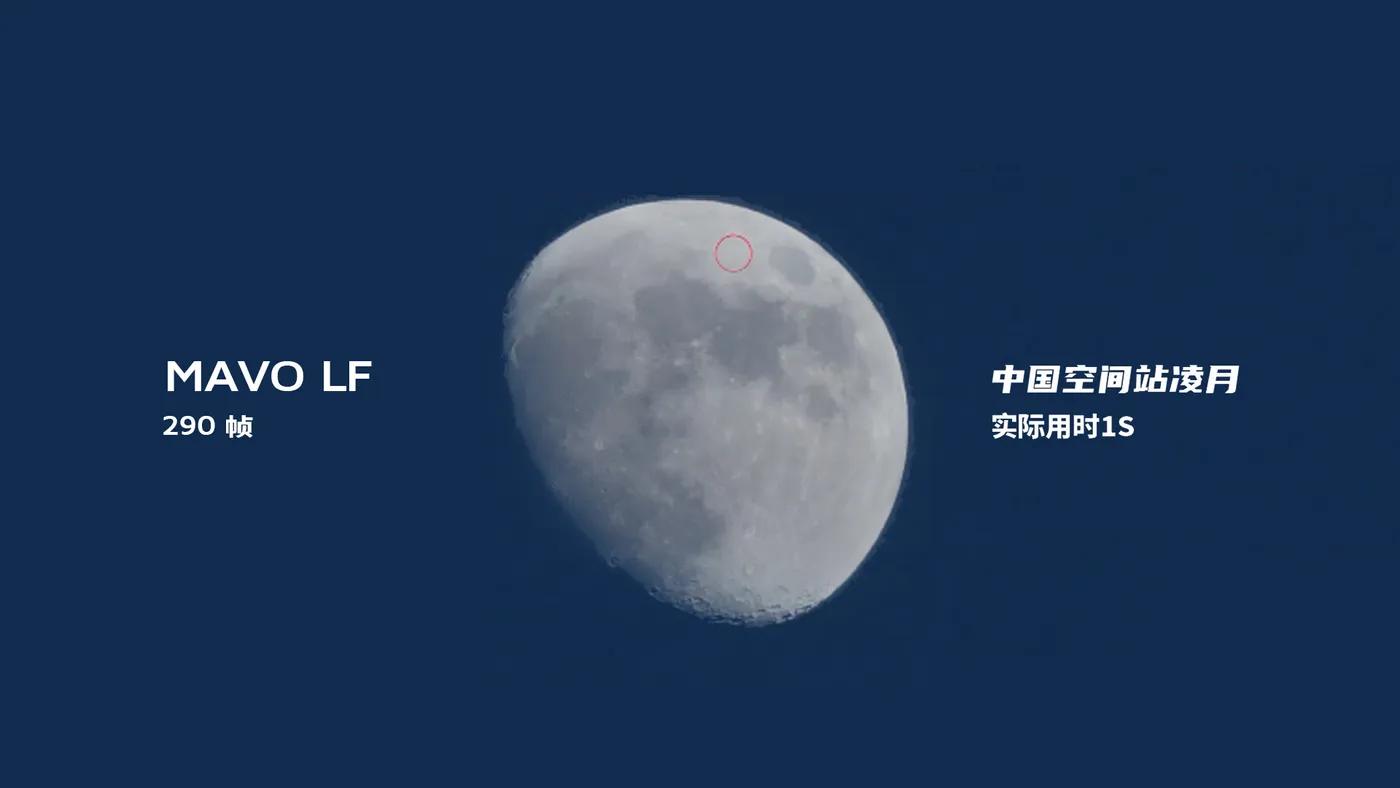
MAVO LF Captures the Chinese Space Station's Lunar Transit
On the afternoon of July 22, 2021, the official Weibo account of People's Daily shared a video of the Chinese Space Station's lunar transit at 19:48:55.8 on July 20th. This precious one-second moment was captured using the slow-motion capabilities of Kinefinity's MAVO LF by an astronomy enthusiast.
Amazed by this footage of the space station's lunar transit, we contacted the video's creator Wang Qiang and invited him to share his astrophotography experience—telling the story behind capturing this astronomical phenomenon with a cinema camera.
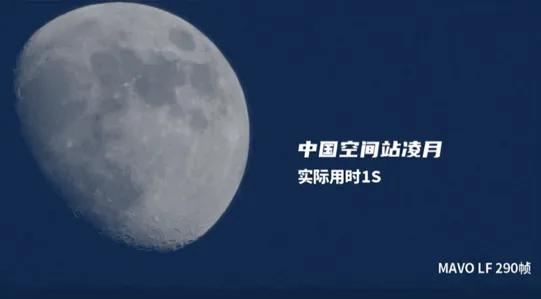
MAVO LF shooting at 290fps @ 2K Wide high frame rate
"We captured the entire process of the Chinese Space Station transiting the moon at 290fps. Although the actual transit lasted only one second, thanks to MAVO LF's slow-motion recording, the playback in post runs 11 seconds, and the footage is incredibly smooth."
Astrophotographer Wang Qiang
The Chinese Space Station's Tianhe core module—captured in this lunar transit—was successfully launched on April 29, 2021. Amateur astronomers from the Dazhou Haotian Astronomy Club had already calculated the station's transit trajectory and timing on July 19th, and on the evening of July 20th, they successfully observed the space station's lunar transit from a roadside location in Baijie Town, Dazhou.
Astrophotographer Wang Qiang walks us through the story of this shoot by answering a few questions.

Astrophotographer Wang Qiang with the MAVO LF
Zhuoyao What prompted you to get the idea of using the MAVO LF to capture the space station's lunar transit?
Wang Qiang I had seen other enthusiasts photograph the Chinese Space Station passing overhead and wanted to try it myself with the MAVO LF from my home balcony. I closely monitored the station's orbital trajectory through the 'AstronomyToday' app, but the weather was always less than ideal. Finally, the space station's passage over Dazhou on July 21st brought a once-in-a-lifetime opportunity. In our observation area, the space station's transit angle and the moon's rising angle aligned perfectly. On the afternoon of July 20th, the club president and Brother Xin had already calculated the shooting position—we ultimately chose a more accessible location.
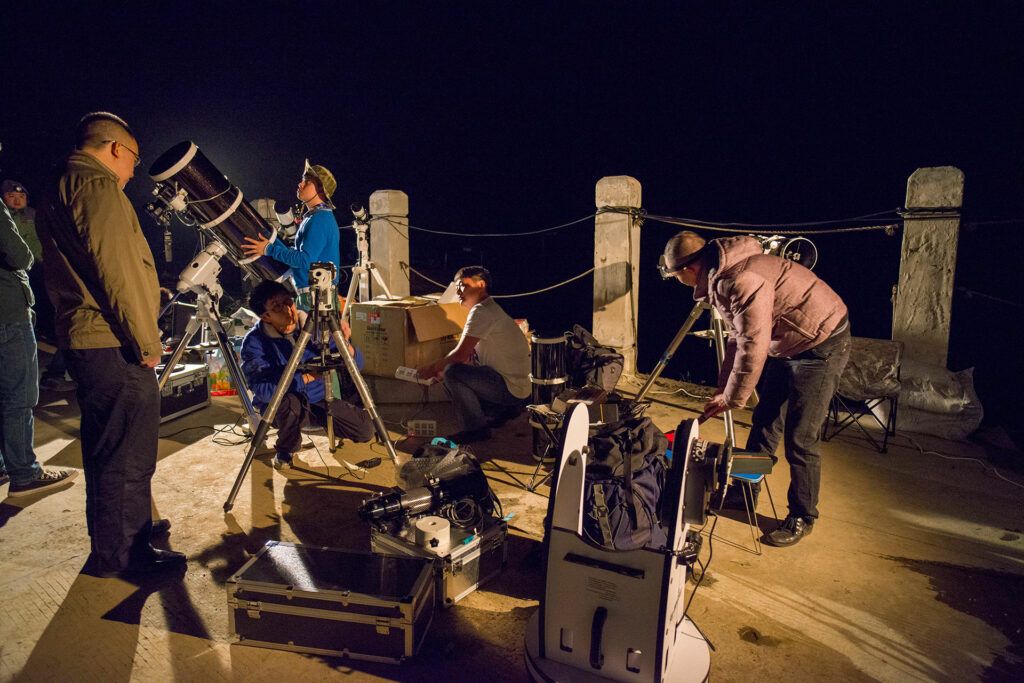
Astronomical observation and recording on-site
Zhuoyao Could you briefly introduce your club?
Wang Qiang The Dazhou Haotian Astronomy Club is made up of amateur astronomy enthusiasts. In 2014, we co-organized the then-largest stargazing gathering in China, together with astronomy enthusiasts from Sichuan, Shaanxi, and Chongqing. The club also regularly organizes roadside astronomy events—setting up telescopes to share astronomical knowledge with the public—which has received positive recognition in the field.
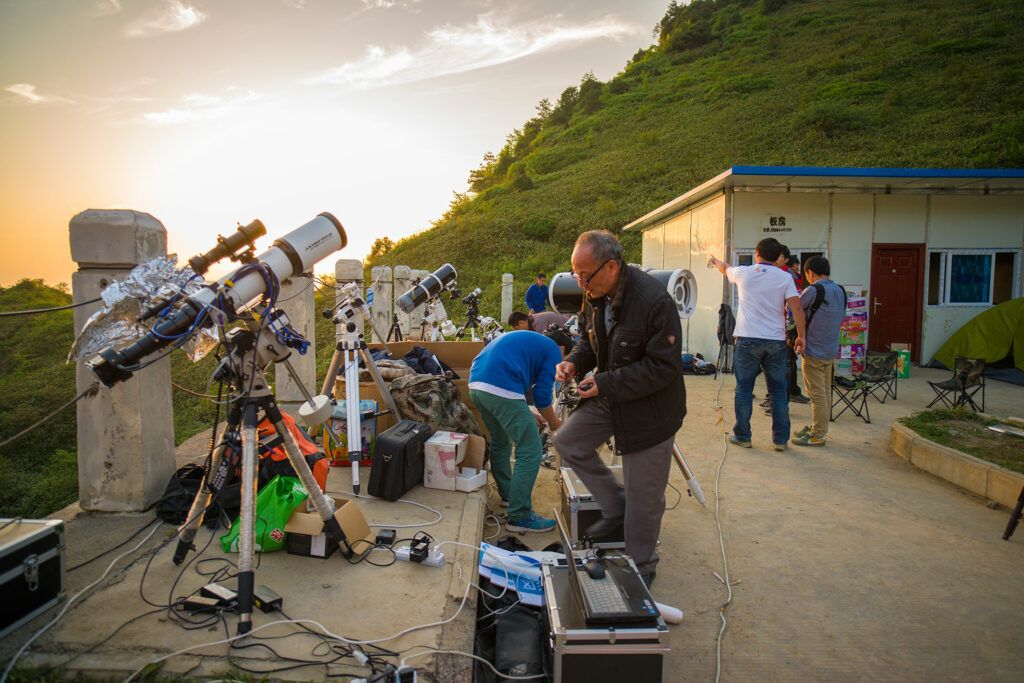
Preparing the astronomical observation equipment
Zhuoyao What specific lens and configuration did you use with the MAVO LF to shoot this video?
Wang Qiang For this shoot, I paired the MAVO LF with a Sigma 150-600mm zoom lens, with settings of290fps @ 2K Wide high frame rate, ProRes 4444 codec, ISO 5120.
Zhuoyao Why did you choose the MAVO LF for astronomical recording?
Wang Qiang Most astrophotography involves shooting time-lapses with cameras in the dark. Since it requires minimal light—no artificial lighting is permitted at the location—until the MAVO LF came along I never had a suitable camera for documenting the behind-the-scenes process. The MAVO LF is perfectly suited forno-light shooting environments—whether roadside astronomy education events, comet photography, or stargazing livestream footage, the MAVO LF's performance has been very satisfying.
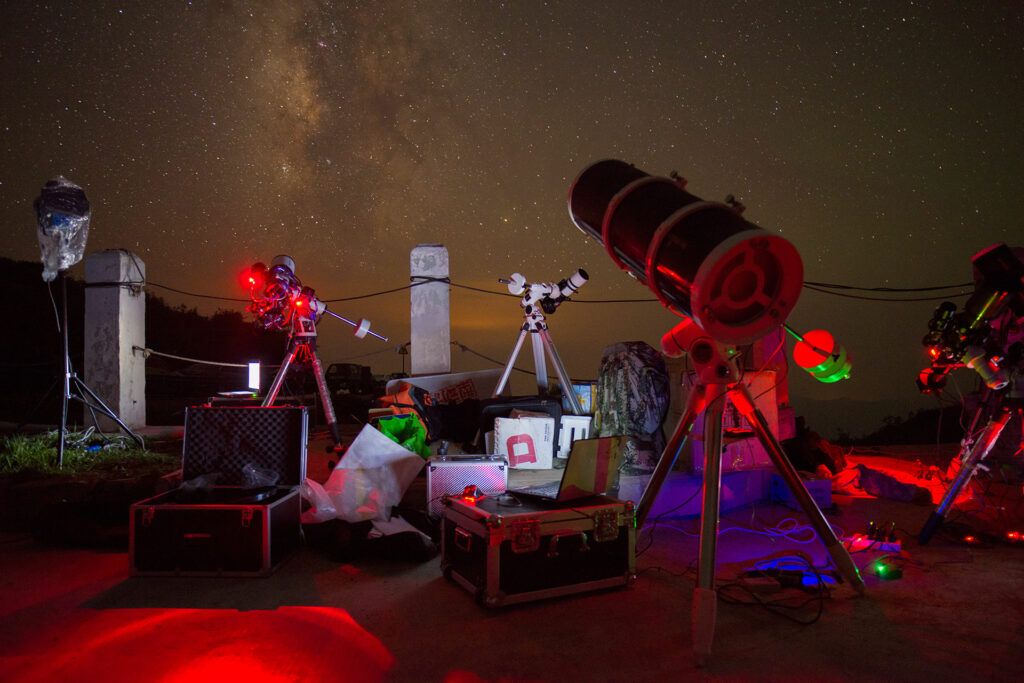
Astronomical observation and recording on-site
Zhuoyao What was it like at the actual shooting location?
Wang Qiang At 6pm on the 21st we set off for the shooting location—a stretch of roadside along a newly built highway. Traffic was sparse and there was little obstruction in the shooting direction. About 5km from the location the sky was still split between heavy rain and a rainbow. The moon had just risen and was appearing and disappearing through clouds—we could only hope it would break through the altocumulus layer quickly. Fortunately summer weather is changeable, and it cleared up soon. Once the camera settings were locked in, we waited. In the last 30 seconds, I made one final adjustment to the composition. Then, at19:48:55, a white dot flashed across the monitor with incredible speed, sparking a burst of excitement on site. Both our club members and the local villagers who had gathered burst into applause—no previous astronomy shoot had ever been this lively.
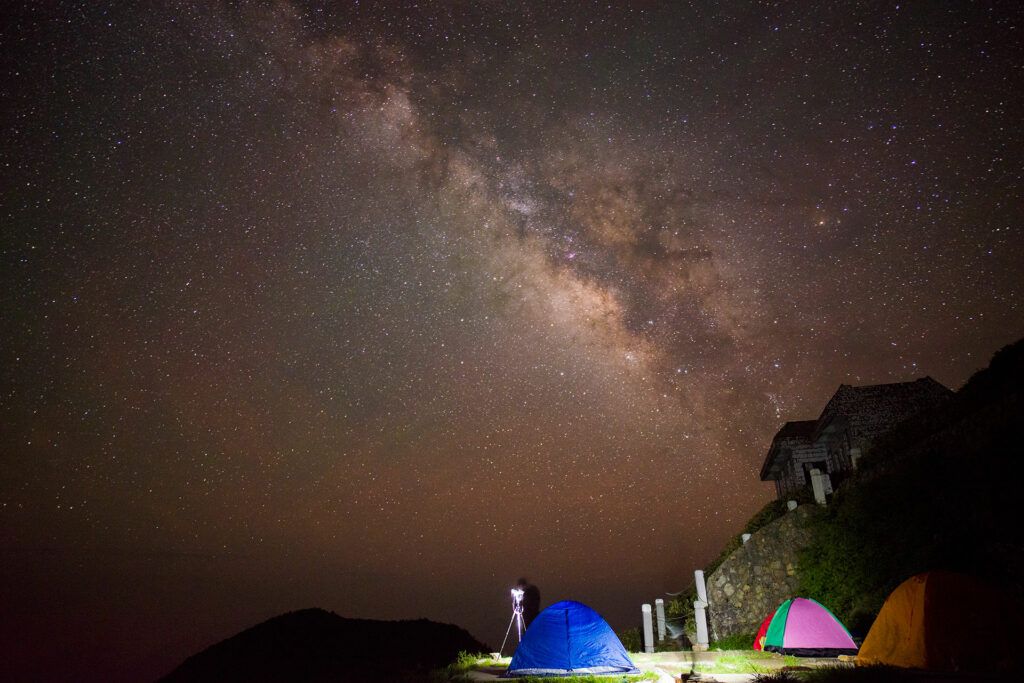
Astronomical observation and recording on-site
We captured the entire process of the Chinese Space Station transiting the moon at 290fps. Although the actual transit lasted only one second, thanks to MAVO LF's slow-motion recording, the playback in post runs 11 seconds, and the footage is incredibly smooth.
For the next shoot we plan to pair theMAVO LF with a 2800mm focal length astronomical telescope, in hopes of capturing the Chinese Space Station in even greater detail.
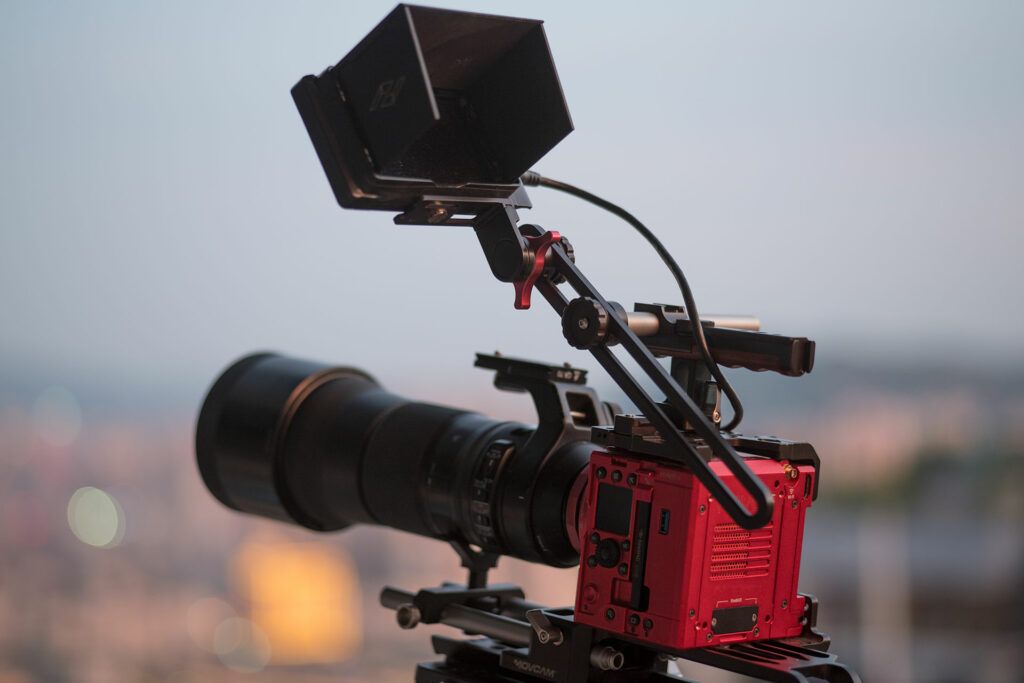
MAVO LF with Sigma 150-600mm zoom lens
Thank you to astrophotographer Wang Qiang for sharing his experience capturing this space station lunar transit.
Kinefinity is genuinely amazed and incredibly proud of the space station astronomical footage captured with the MAVO LF—and deeply proud of the completion of this milestone in China's crewed spaceflight program.
We look forward to Kinefinity cameras documenting more space station images and astronomical wonders in the future, and to sharing the visual awe and breathtaking moments that astronomy footage brings with everyone who loves space exploration.