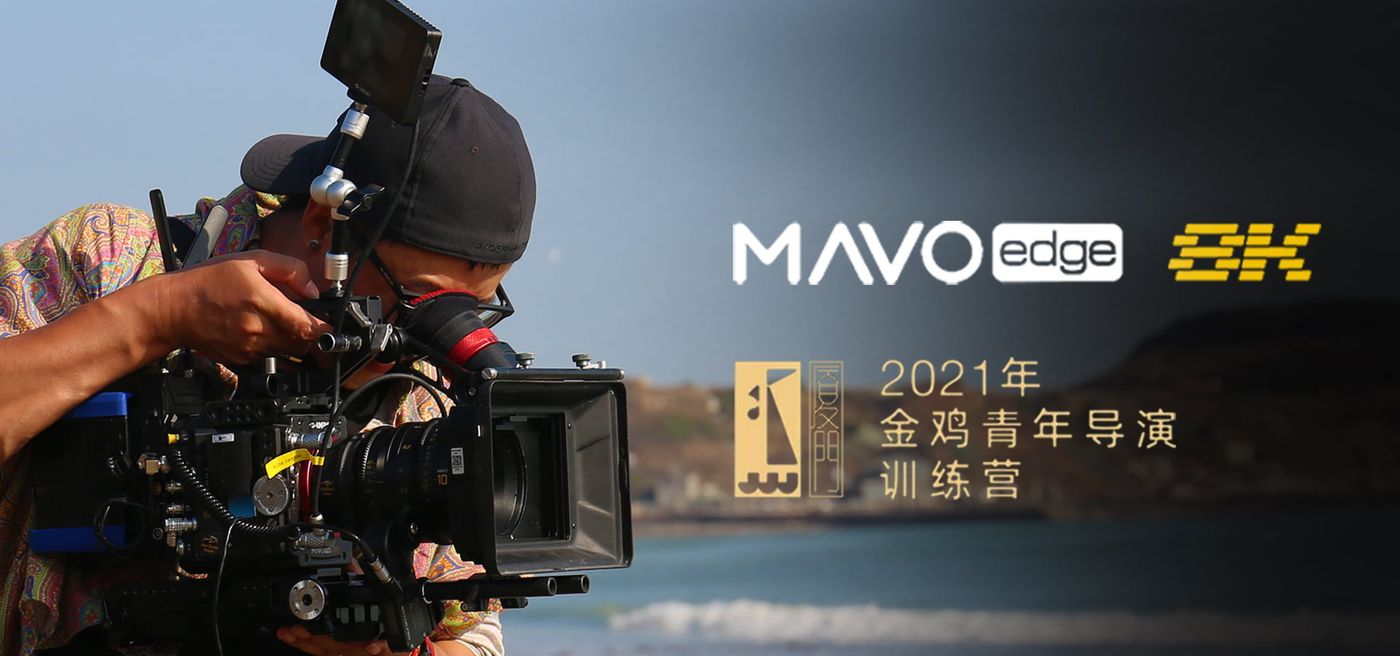
Interview with DP Chen Xiaomeng of "Sa Sha"
"My very first impression of theMAVO Edge 8Kwas excellent—both the body weight and shape achieve a perfect balance with the lens and battery. You can adjust it front-to-back until it feels like a cat sitting perfectly balanced on your shoulder."
DP Chen Xiaomeng, "Sa Sha"
The short film "Sa Sha," directed by Tan Yukun and shot by Chen Xiaomeng,was filmed at the Golden Rooster Youth Director Training Camp using the MAVO Edge 8K.It was subsequently selected for the Short Film section of the 44th Moscow International Film Festival and the Toronto Women's Eye Film Festival, won the Best Growth Award at 2022 HiSHORTS Xiamen Short Film Week, the Best Short Film Gold Snail Award at the Ningbo International Micro-Film Festival, and received numerous other accolades.On January 3, 2023, the film won Best Performance at the 9th Silk Road International Film Festival."Sa Sha" tells the story of fishmonger girl Zhang Shasha, who buys a shark to earn school tuition—only to be hit by a recurring lockdown. Fearing the shark won't survive until the shop reopens, she sets out to find a buyer...
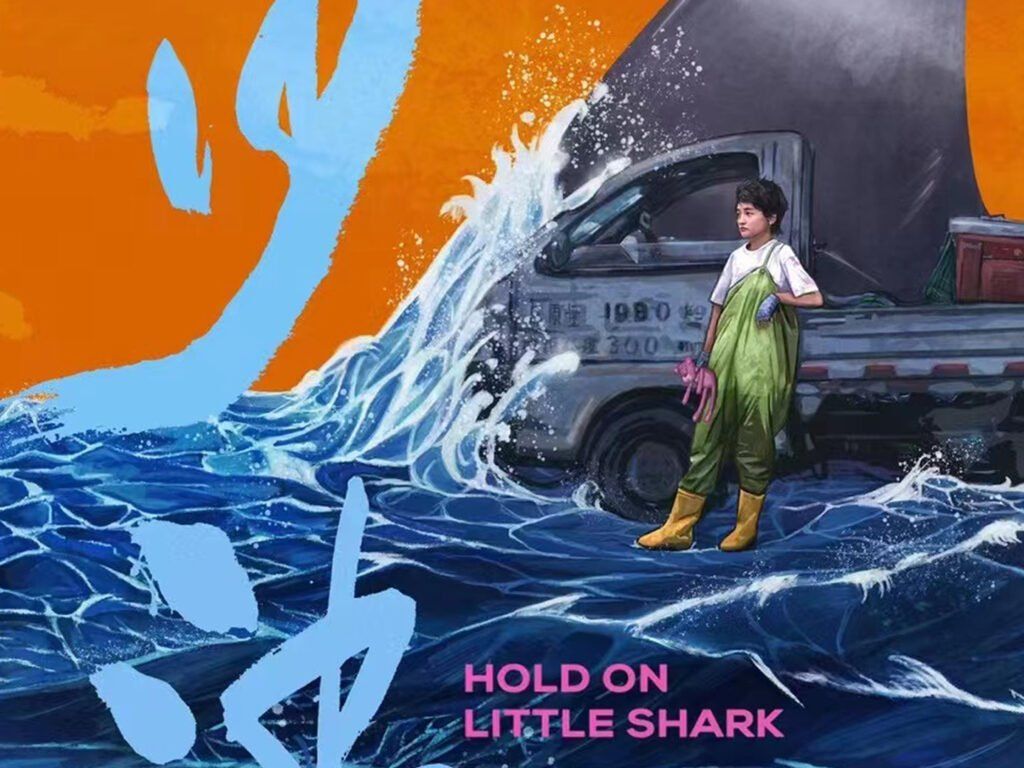
"Sa Sha" poster
Tan Yukun is a director and film editor. His short film "Catch That Little White Dog" won multiple domestic and international awards including the 2021 Beijing Film Academy Best Editing Award and a 2021 Golden Rooster Top Ten Recommended Short Film. His editing work on "Pegasus" was nominated for Best Editing at the 28th China Golden Rooster Awards. His 2021 short "Sa Sha" was selected for the 44th Moscow International Film Festival Short Film section, the Toronto Women's Eye Film Festival, and won the Best Growth Award at 2022 HiSHORTS Xiamen Short Film Week, among other awards. His feature project "Local Doug" won the Sanya Focus Grand Prize and Pioneer New Filmmaker Plan Award at the 2022 4th Hainan Island International Film Festival H! Action Pitching Forum. Chen Xiaomeng is a cinematographer and director, a graduate of the High School Affiliated to CAFA and the Beijing Film Academy Department of Photography. His 2021 cinematography work "Sa Sha" was selected for the 44th Moscow International Film Festival Short Film section and other international festivals; his feature cinematography work "Love Novel" is currently in post-production. As director, his sci-fi short "The Mining Mystery" won multiple domestic and international awards including the 2016 Global Chinese-Language Sci-Fi Film Nebula Award; his sci-fi film "21st Century Human Manufacturing Plan" was selected for the 2022 Blue Planet Imagination Phantom Film Project and won the 2022 FIRST Surprise Festival Dream General Surprise Shoot Gold.
We specially invited DP Chen Xiaomeng to share his MAVO Edge 8K experience, along with excerpts from Director Tan Yukun's account of the film's preparation (from theLiangjie Film Handbook Director Dialogue: Tan Yukun's "Sa Sha").

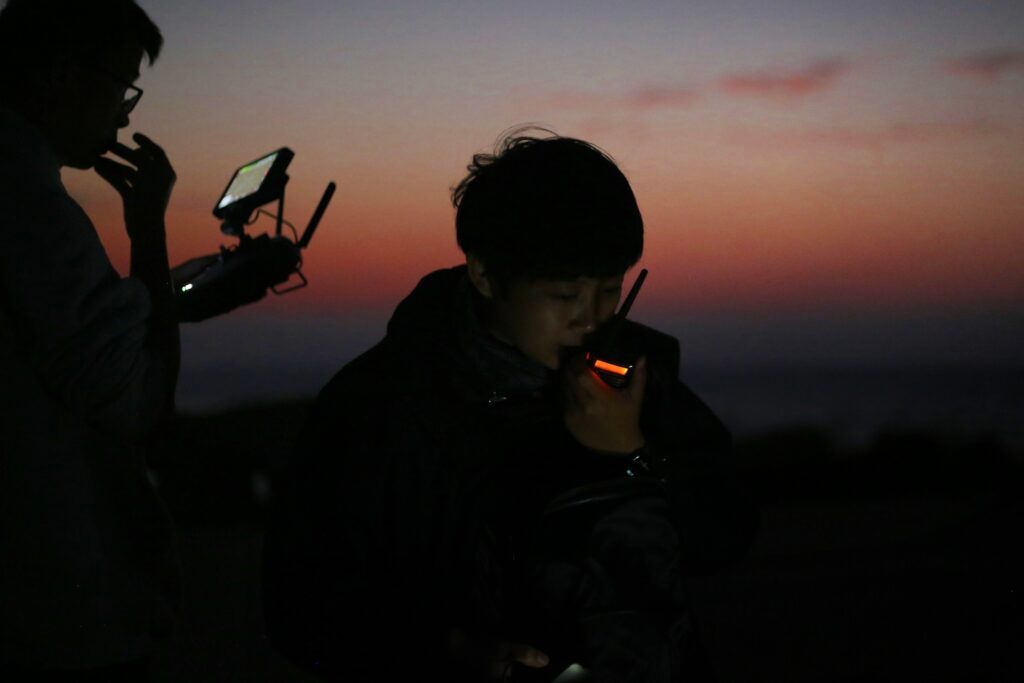
"Sa Sha" director Tan Yukun
Q What was your original motivation for making this film?
Tan Yukun "Sa Sha" originated from a short film competition—the 2021 Golden Rooster Youth Director Training Camp, which gave the theme "Choice" and asked participants to develop a story within one month and shoot it in Xiamen.
My impression of Xiamen came from the summer of 2019, before the pandemic. On the bustling main streets at night, behind them were dense rows of seafood shops. The fronts of these little shops were lined with blue-green tiered stacked water tanks, topped with simple fluorescent tubes illuminating the tanks full of live seafood. Large quantities of live fish were packed in tightly, struggling to breathe, and the owners called out enthusiastically to customers.The scene felt a bit cruel, but also very vivid.So I chose to set the story at a seafood shop, with two fishmonger girls as the protagonists.
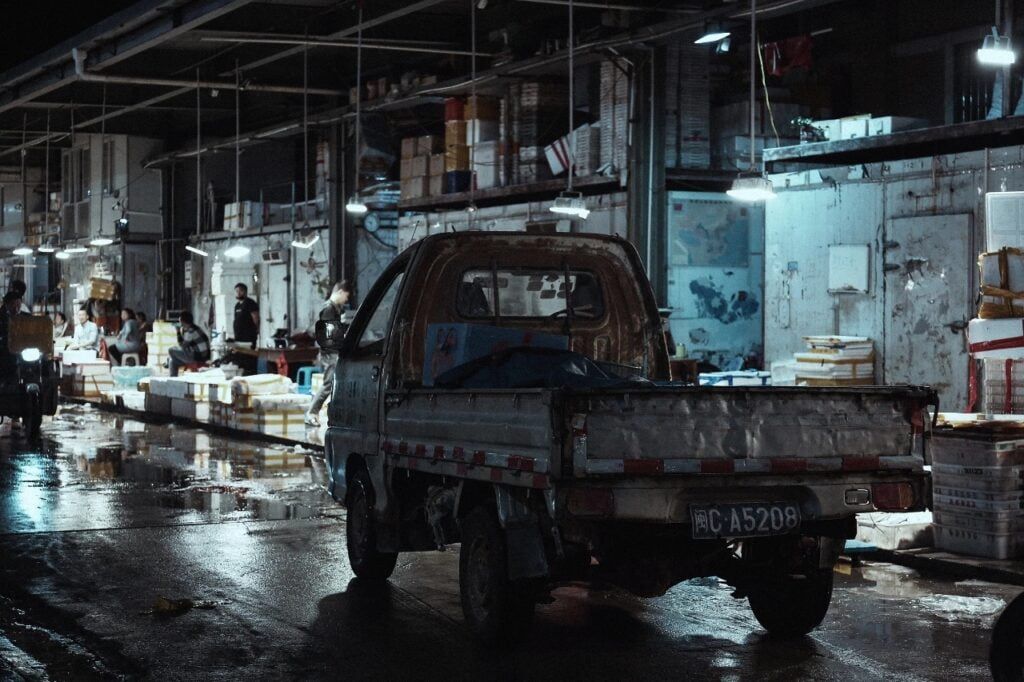
The seafood shops behind the main street
Q In the seaside sequence depicting Shasha's inner state, the filter transitions and slow motion have a wonderful quality. Was there pre-production work on storyboards or other concepts for that section?
Tan Yukun Our team was small and everyone wore multiple hats, with very limited control over the physical environment during shooting. The actual shooting conditions were completely different from the scouting visit.We couldn't control the foot traffic on location at the time, so this sequence was improvised.In terms of storyboarding, we didn't create very detailed boards for the whole film. My approach was to talk with the cinematographer first, talking through each scene thoroughly. When scouting we'd establish rough camera positions, then refine and adjust based on the actors' performances during the actual shoot. Sometimes actors need a certain amount of buildup to find their best state—when everyone feels it's right, something great emerges.Here I want to thank my cinematographer Chen Xiaomeng—his composition and visual instincts are exceptional.
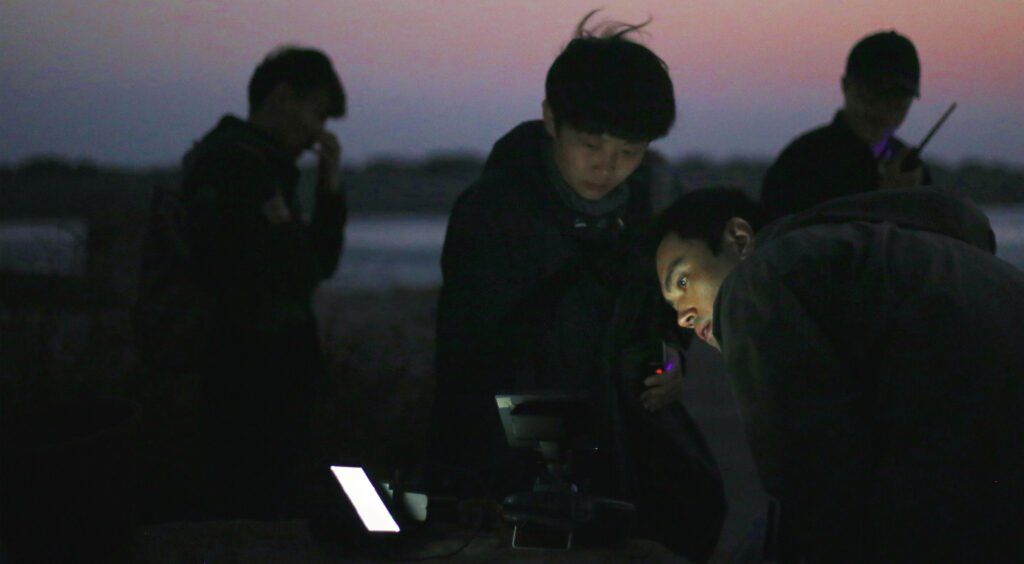
Director Tan Yukun and DP Chen Xiaomeng
Q Here are some questions about shooting technique and film language. I noticed the film uses a lot of handheld shots—why did you choose that approach to express the film's ideas? Tan Yukun During the scripting and scouting phase, my cinematographer and I decided on a 4:3 aspect ratio and handheld shooting, because I wanted to express a powerful working-class figure:when this girl cleans and cuts fish, her hands move with swift, practiced strokes—skilled as a cold-blooded professional.We created a correspondence between the camera's movement and Shasha's actions to emphasize the sense of force and power. It also brings the audience closer to Shasha, following her emotional journey—hence handheld.
We used the training camp-provided MAVO Edge 8K camera to complete about half of the scenes—the static setups and the actor dialogue scenes.Kinefinity's special image texture and image quality are stunning.
"Sa Sha" film still

DP Chen Xiaomeng on the "Sa Sha" set
Zhuoyao When you first read the script, what were your thoughts on the visual style? Chen Xiaomeng The story gave me a sense of rawness. For example, the fishmonger girl will go and confront the men of the fishing port to complete her choice—but this female character also has a quality of fluidity and emotional richness.So I wanted the visual style to be raw and fluid—the rawness mainly achieved through handheld shooting. Kinefinity captured both these qualities with exactly the effect I wanted.
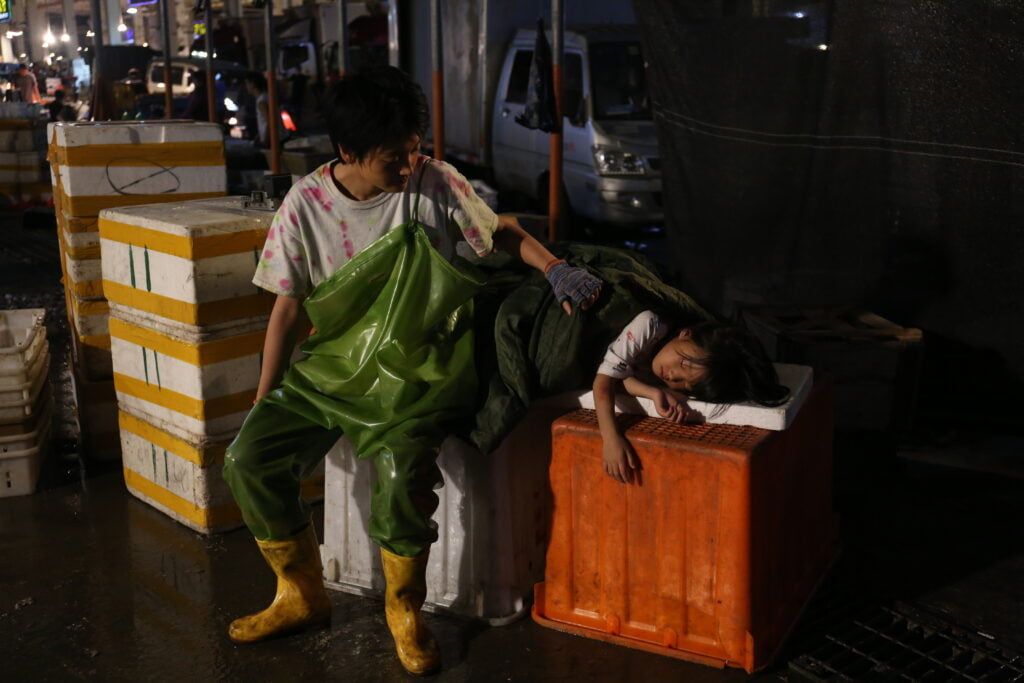
Fishmonger girl Zhang Shasha
Zhuoyao Did you operate the camera yourself throughout the shoot? How was that experience?
Chen Xiaomeng I operated the camera myself the whole time, using Kinefinity and some other equipment—because there was also aerial and car shooting, this was a very varied shoot.My very first impression of theMAVO Edge 8Kwas excellent.Both the body weight and shape achieve a perfect balance with the lens and battery. You can adjust it front-to-back untilit feels like a cat sitting perfectly balanced on your shoulder.
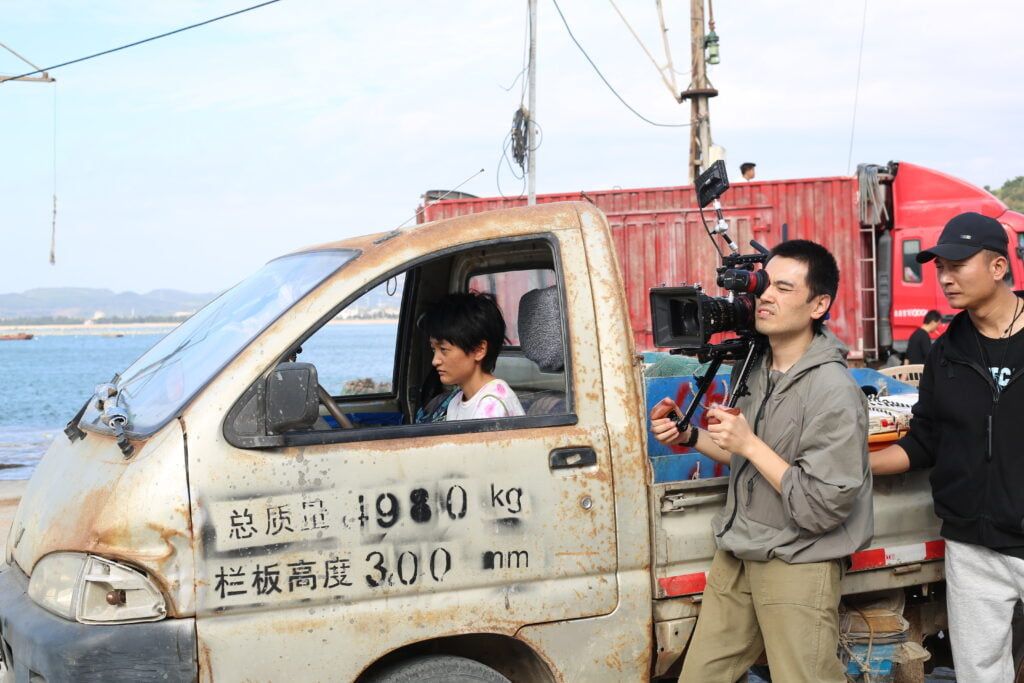
Chen Xiaomeng filming the car scene
Zhuoyao: What were your considerations for lens selection? What lenses did you use?Chen Xiaomeng:I used the MAVO Prime large-format T2.0 prime cinema lenses—they felt really good. They have a vintage lens quality, and since I'd been using other lenses for so long my visual sense had become fixed,working with these lenses I felt the whole image palette was completely fresh.
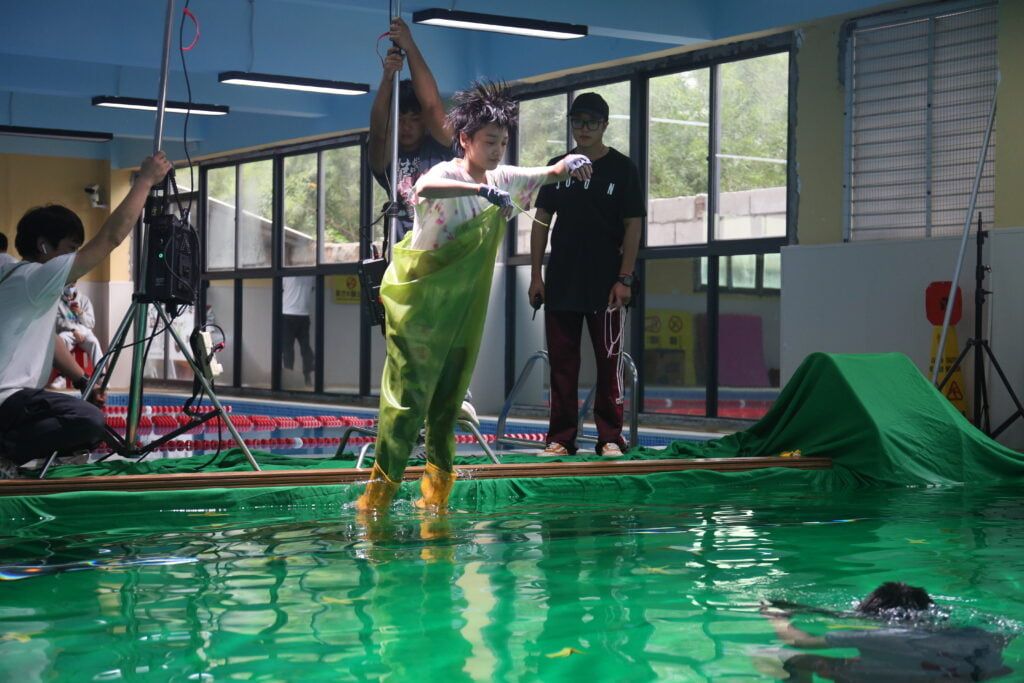
Underwater shooting on location
I shot using the camera's built-in LUT—the overall image was quite vivid, the colors very bright, and the protagonist's skin tone had a slightly vintage quality.Because our characters' makeup was particularly 'weathered'—rough skin, deeply tanned—these lenses made the skin tones even richer. I think if I had used ARRI lenses, it might have looked more like a standard image. That difference is actually very good—it gives you a new image quality.

MAVO Edge 8K on the "Sa Sha" set
Zhuoyao The film has night scenes and golden hour—very varied conditions. What were your on-set considerations?
Chen Xiaomeng I was constantly using the MAVO Edge 8K's built-in ND. Our shooting scenes included early morning at the dock selling fish, dawn tidying up the shop in the fish alley, and then morning, midday, golden hour, and night.The light changed enormously across these scenes—the built-in ND solved many problems. For exterior shooting, I'd go to ND 2.1.For noon shooting I'd start at ND 2.1, then pull back slightly if needed.
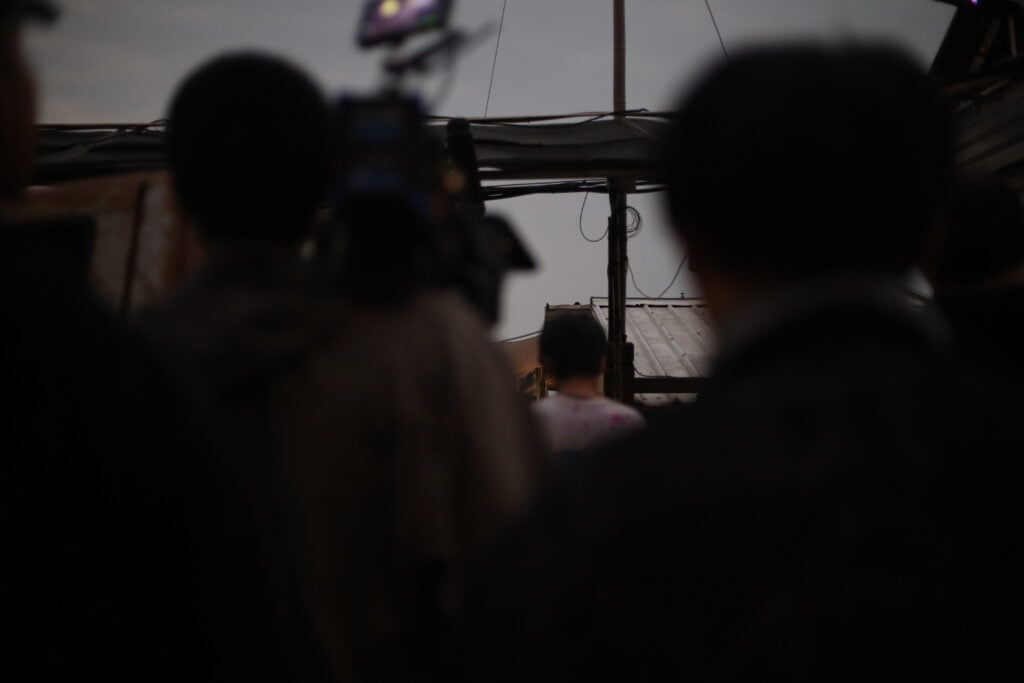
凌晨《莎鲨》剧组拍摄
In addition, I especially love the MAVO Edge 8K's ability to adjust the highlight headroom.I've done systematic testing on ARRI cameras and know roughly what the highlight and shadow detail look like at different ISOs. The MAVO Edge 8K lets you manually dial in that same feeling—which really surprised me.
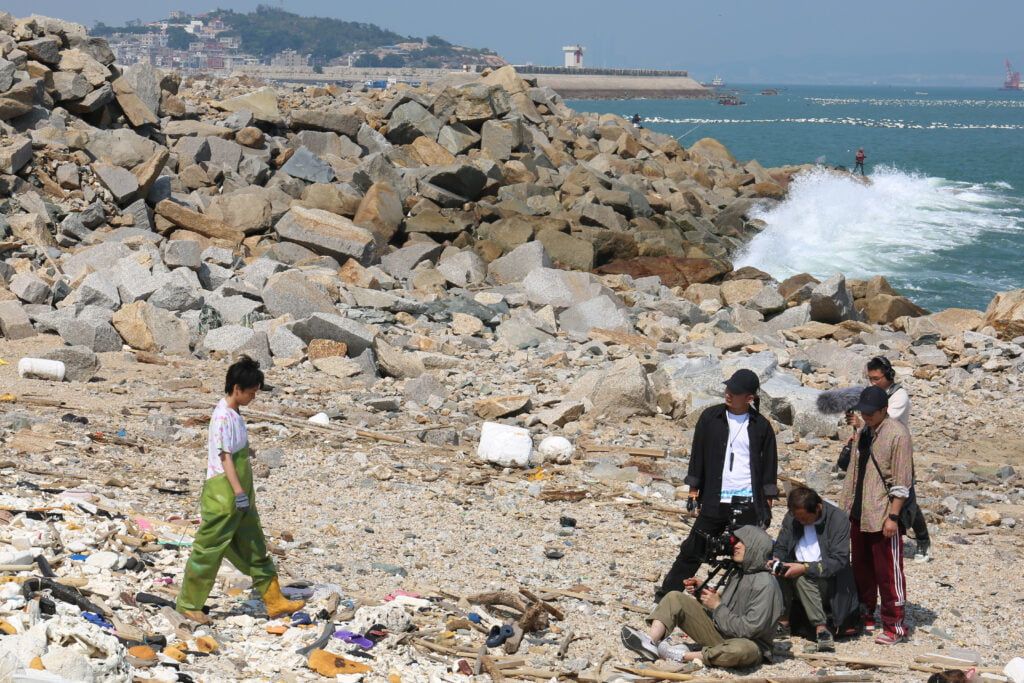
MAVO Edge 8K shooting at midday
The MAVO Edge 8K has dual native ISO: ISO 640 and ISO 2560.I generally use native ISO 640.It's very similar to ARRI—our tests showed ISO 640 to be the most balanced, though during daytime I'll often try to drop it to ISO 250, with the highlight headroom set to 5.6 or 6.0 stops.For night shooting it's excellent—I'd set sensitivity to ISO 5600.
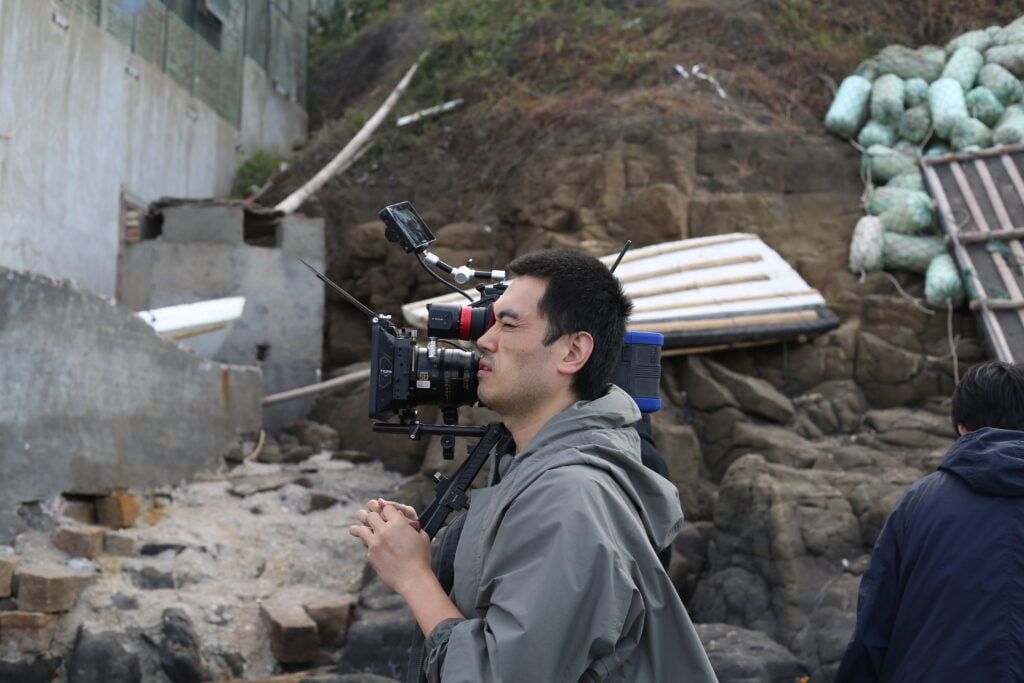
Chen Xiaomeng operating the MAVO Edge 8K

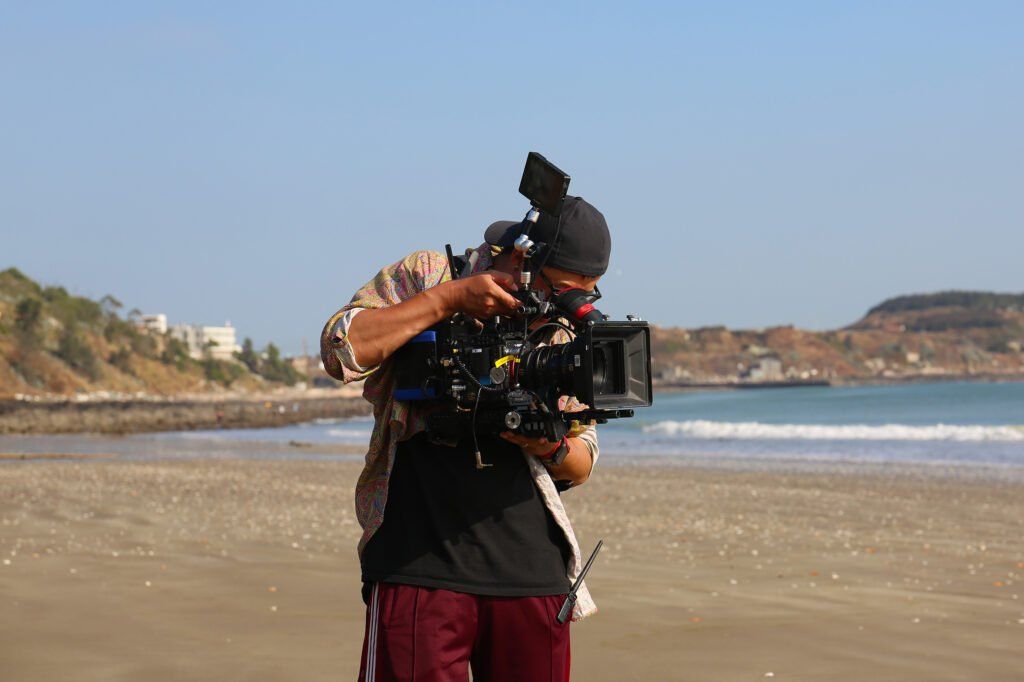
"Sa Sha" production on set
Zhuoyao As a full-frame camera, how do you feel the MAVO Edge 8K compares to S35 shooting? How does it affect composition and style? Chen Xiaomeng: The difference is in the sense of reality. Sensor size determines the rendering of spatial depth—the larger the sensor, the more three-dimensional the space in the image, creating a stronger sense of presence. I remember once visiting a collection of century-old 8×10 stereoscope slides belonging to a friend's father. When I looked through the small viewing hole at an 8×10 large-format reversal film photograph of a person from the Qing dynasty, it was as if a real person from the Qing dynasty was standing right in front of me. The sense of presence of large format had brought this person across time into my immediate presence—that's the advantage of large format in conveying presence.Large format is the direction of the future—it could potentially change storytelling methods and bring cinema into a new era.
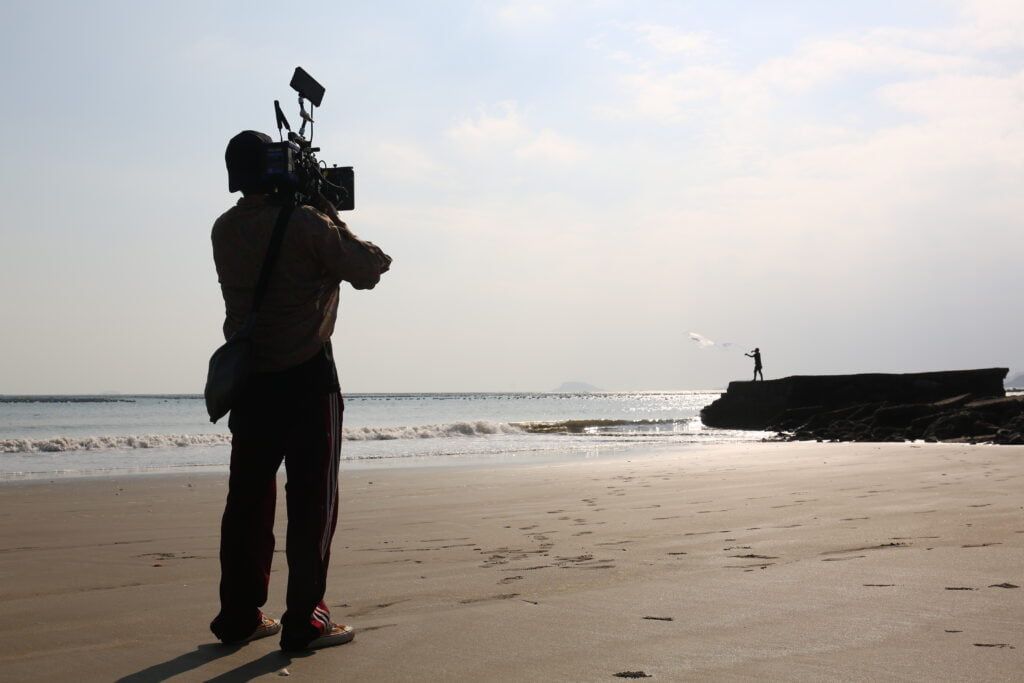
MAVO Edge 8K shooting by the sea
Zhuoyao What do you see as the MAVO Edge 8K's core advantages? Compared to mainstream cameras, what do you think makes it special? Chen Xiaomeng: My intuitive feeling is that its image looks different from other cameras. If my next project has this kind of style, I'll use the MAVO Edge 8K. First, its visual style is distinct from RED and ARRI—it's a new visual style, uniquely Kinefinity. Second, it has dual native ISO, and swapping mount adapters is also very easy—these are technical advantages. Third, the image is excellent with minimal rolling shutter.So if I'm shooting a feature, I'll continue to choose the MAVO Edge 8K.I sincerely hope Kinefinity continues to grow and improve, making Kinefinity cameras a new choice for cinematographers.I firmly believe Kinefinity will become a distinctive, new visual style.
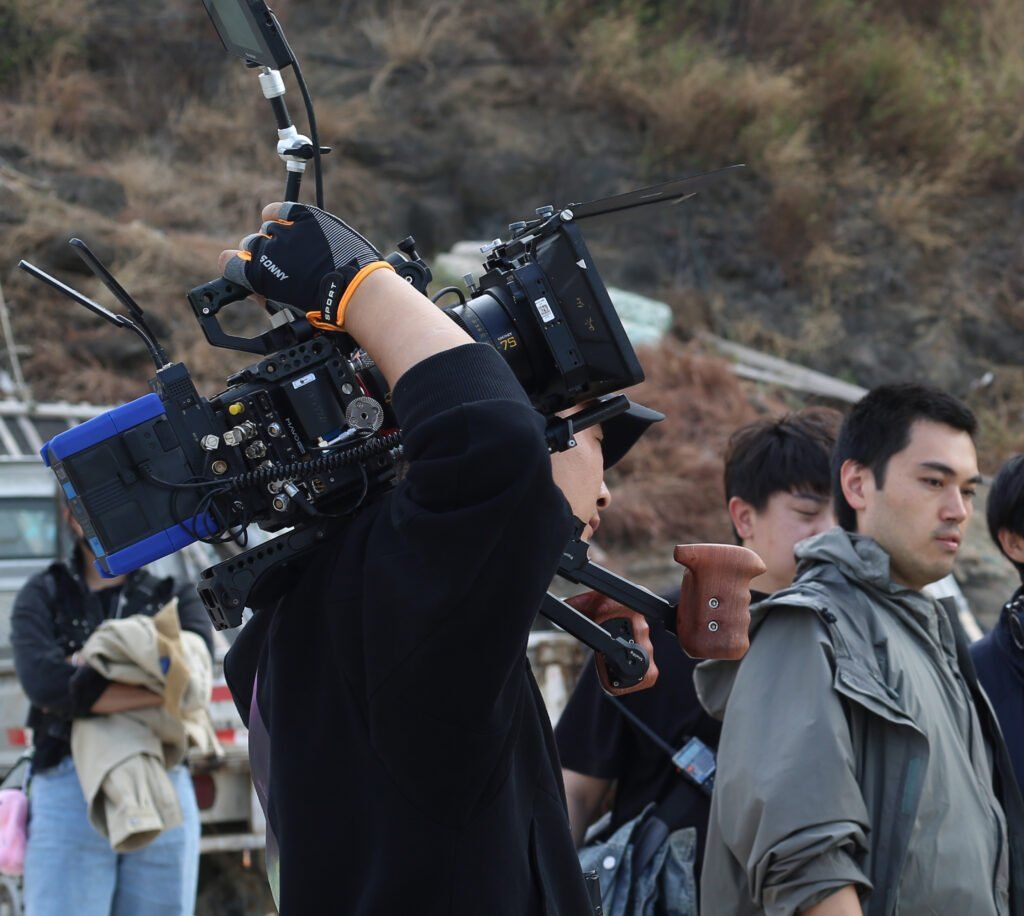
Camera assistant shoulder-mounting the MAVO Edge 8K
"Sa Sha"—from the 2021 Golden Rooster Youth Director Training Camp, to the Toronto Women's Eye Film Festival, the Moscow International Film Festival, to the 9th Silk Road International Film Festival. Along the way, we've seen the powerful human resonance embedded in this film. We look forward to more outstanding work from Director Tan Yukun and DP Chen Xiaomeng."The future belongs to the young, and hope rests with the young." Kinefinity has always been committed to supporting young filmmakers,supporting the Golden Rooster Youth Director Training Camp, expressing care for society and love for creative work through a young perspective.