Jerome Interview | A Comprehensive MAVO Edge 8K Review
The MAVO Edge 8K has been available for nearly three years, and many creators have used it to produce extraordinary images.
"The MAVO Edge 8K gave me so many more choices. I started rethinking everything—throwing out all my old grading parameters—because the camera's images were simply better." Jerome Gafpa, Dutch-born freelance cinematographer who loves translating life and stories into images. From the original KineRAW S35 to today's MAVO Edge 8K, Jerome has witnessed Kinefinity's evolution and growth.

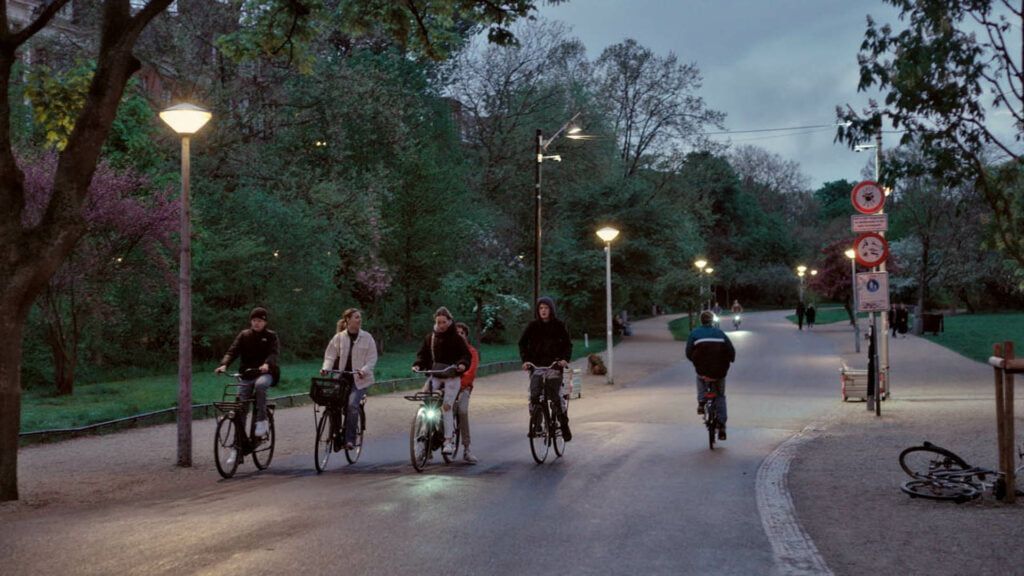
I was strolling through Amsterdam with the MAVO Edge 8K, shooting night scenes, when on the way back I heard someone calling my name. It was a dancer I had known for a long time. He hopped off his bicycle and asked, "Want to dance?" So we quickly shot this little piece of footage together, then waved goodbye. Leica Summilux-M 50mm f/1.4 ASPH, ProRes 4444, 4K oversampled.
Jerome Gafpa
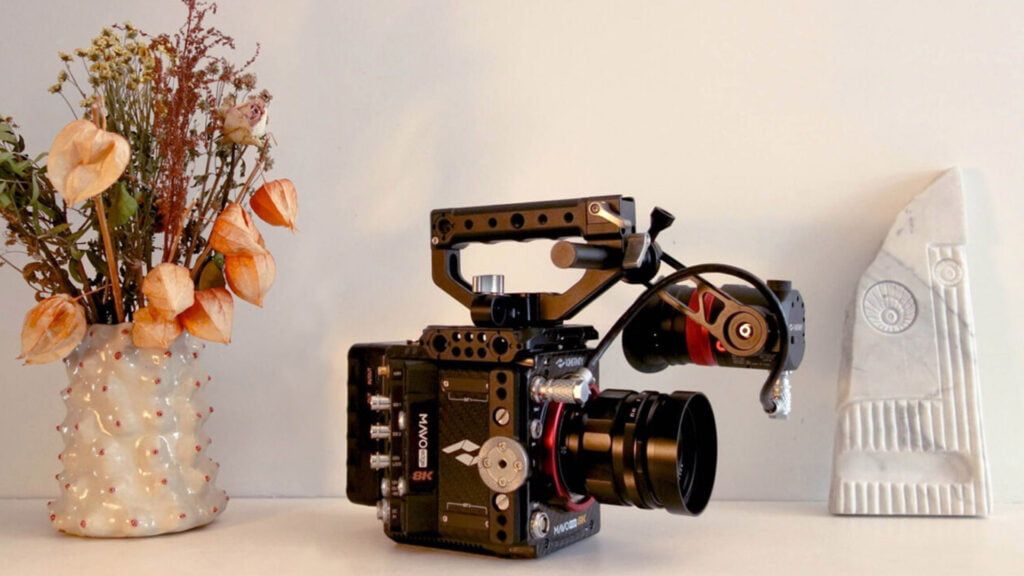
Zhuoyao: What was your first impression of the MAVO Edge 8K? Jerome: I've been watching the MAVO Edge 8K closely since its launch in 2020, and I was very fortunate to get my hands on it right when it shipped. Unlike looking at photos, I could feel the actual weight—feel it sitting in the palm of my hand.The MAVO Edge 8K is genuinely very light, with a very compact form—it even feels smaller than the MAVO LF.To me, this camera represents Kinefinity's ambition—the biggest leap they've ever made.

Jerome's test footage stills
Zhuoyao Beyond your first impression of its compact size, were there any specific design elements of the MAVO Edge 8K that caught your attention? Jerome First, the dual SSD slots support dual-card recording—one card can serve as a backup, which is very convenient.I also really like that the MAVO Edge 8K has kept the SDI port while removing HDMI.Compared to consumer-grade HDMI, SDI monitoring is clearly more professional for cinema work. The camera's SDI output has also been upgraded to 10-bit, delivering richer color and a more comfortable monitoring experience.The MAVO Edge 8K's audio quality has improved noticeably.The XLR output has been upgraded to 24-bit—less noise, capturing even subtle sounds, making it much better suited for documentary work. The body not only integrates two XLR inputs but also supports four-track recording, giving us the freedom to choose our audio tracks.

Jerome's test footage stills
In terms of the physical design, I love the angled corners on the rear of the body. Honestly, packing that many ports into such a small body is an incredibly difficult engineering challenge.But theMAVO Edge 8K's design is very clever—it integrates industry-standard ports while also supporting a wide range of accessories.I don't know how Kinefinity managed to fit that many cables and circuits into such a small body—it's truly stunning and was no easy feat. But I know Kinefinity is very willing to listen to user feedback and constantly work toward perfection.I believe there will be many more firmware updates in the future to further enrich the MAVO Edge 8K's capabilities.

Jerome's test footage stills
Zhuoyao How about the hands-on experience—the button layout and the menu system? Jerome I think the biggest usability improvement is that there are more buttons and they're larger.Using the LF's buttons was a bit like playing guitar—you occasionally had to think about where your fingers needed to go. But now every important parameter has its own dedicated button, letting the cinematographer stay focused on the creative work.Just looking at the menu, you can clearly see the MAVO Edge 8K is a camera truly designed for cinematographers. I think Kinefinity has nailed this particularly well.Cinematographers generally prefer digital cameras that are as simple as possible—almost like a film camera—with only the most essential parameters on the main screen: FPS, ISO, shutter angle. Not an overwhelming number of settings. Many customers often want to add this and that to the camera menu, but in practice, adding too much content doesn't serve the menu's usability.

Jerome's test footage stills
I think the MAVO Edge 8K is a camera that will make cinematographers genuinely feel: 'This was made specifically for me—for us cinematographers—for filmmaking.' And this is clearly reflected in the resolution settings.If you look closely at the menu, you'll find that both full-frame and S35 mode offer a 2.39 crop, as well as a 6:5 aspect ratio for anamorphic shooting.These are traditional cinema crop sizes and aspect ratios—oriented toward cinematic production.

The harsh, direct sunlight in these test clips is not my usual shooting light, but since many people asked to see it, I complied. This is typical Dutch May sunshine—raw and unflattering. With a gaffer present, I would definitely relight and reshape the light. But I did nothing here, since that best demonstrates the camera's dynamic range. Wide shots may not show it much, but some close-ups are worth studying. This footage was shot with several lenses: Dulens Mini Prime 58mm, ZEISS Contax G 45mm, and Cooke Speed Panchro S2 75mm. Most was in OG mode, some in DCI, but all full-frame.
Jerome Gafpa
Zhuoyao Do you have anything to say about theMAVO Edge 8K's image quality? Jerome: I believe many people when this camera first came out thought: why would I need an 8K camera? Why is Kinefinity pushing 8K—a resolution difference my eyes can barely perceive? In fact, when you shoot with a 4K sensor, you're not truly getting genuine 4K quality. Digital sampling must exceed 0.7 times the sample to achieve the most accurate sampling rate. Many cameras don't support oversampling because their internal processors aren't powerful enough.The MAVO Edge 8K not only shoots 8K, but also excels at 4K oversampling.

Jerome's test footage stills
The MAVO Edge 8K is extremely well suited for oversampling—because 8K data is 4x the volume of 4K, there is vastly more image detail, overcoming aliasing and other image artifacts while delivering lower noise and richer color depth.Of course, if for some reason you specifically need 8K—for enlarging detail in post—then 8K shooting is an excellent choice.But if you simply want a very rich and sharp image, I recommend shooting with the MAVO Edge 8K in 4K oversampling—ProRes 4444. It will absolutely astonish you.
Jerome's test footage stills
I would never say the MAVO LF isn't a great camera—anyone who's seen the beautiful work Kinefinity customers have shot with it couldn't say that.But the MAVO Edge 8K is clearly superior to the MAVO LF in color capture, and you can tell Kinefinity has done a tremendous amount of work on color science.

Jerome's test footage stills
Speaking of color, we have to talk about dynamic range. Some camera brands don't have as much dynamic range as they claim.Testing shows the MAVO Edge 8K has approximately 0.8 stops more dynamic range than the MAVO LF—almost a full stop—allowing it to capture more detail in cloud formations and highlights.

Jerome's test footage stills
Furthermore, more dynamic range makes exposure easier. With the MAVO LF, I occasionally had to underexpose to protect highlights, which sacrificed some shadow detail. Though not dramatic, this somewhat limited the color correction options in post, so I was always constrained to a familiar range of grading parameters.The MAVO Edge 8K gave me so many more choices.After working with the MAVO Edge 8K, I discovered much more in post-production. I threw out all my old grading parameters and started thinking fresh—sitting at the computer like a workaholic until two or three in the morning doing my favorite color work. All because the camera's images were simply better.

Jerome's test footage stills
Zhuoyao Compared to other high-end professional cameras in the industry, what do you think makes theMAVO Edge 8Kstand out? Jerome: First, I think the most impressive thing is the price-to-performance ratio.

Jerome's test footage stills
Another thing that impresses me is the electronic ND.Without exaggeration: once you've worked with a camera that has built-in electronic ND, you'll never want to go back. Not only is it incredibly efficient, but having the ND positioned after the OLPF provides great protection for it—and none of the dust and particles you can sometimes get with external NDs.The MAVO Edge 8K's built-in ND is also fully stepless, making it very comfortable to use. Beyond that, the MAVO Edge 8K has a very short learning curve.If you're new to Kinefinity, you can master all thebasicfunctions and operating logic in under an hour.If you're an existing Kinefinity user, it'll be even easier.
"After throwing out all my old grading parameters, I started thinking fresh—sitting at the computer like a workaholic until two or three in the morning doing my favorite color work. All because the MAVO Edge 8K's images were simply better."
Jerome Gafpa, Freelance Cinematographer
From the original KineRAW S35, to the MAVO LF, to today's MAVO Edge 8K—through eleven years of growth, Kinefinity is grateful for the trust and companionship of every user. We look forward to seeing many more outstanding works created with Kinefinity cameras!