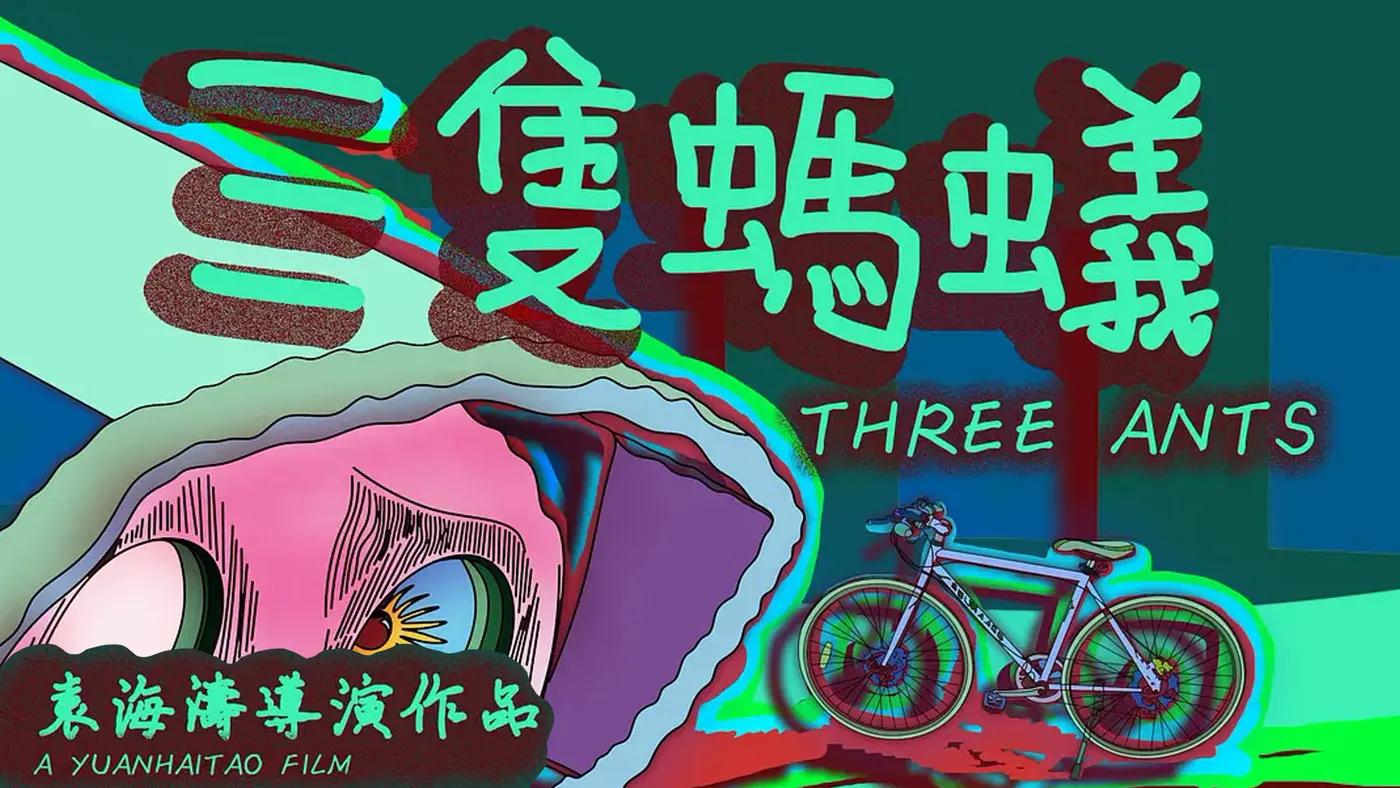
MAVO LF | Golden Rooster Cross-Strait Top Ten Short: "Three Ants"
"We were pleasantly surprised to find that the MAVO LF's images remained incredibly detailed at high ISO—no widespread noise, excellent shadow detail control, and very natural highlight rolloff."
DP Yang Shuai, "Three Ants"
Three groups of characters, three stories, all converging on a single highway. Zhang Zhijun is involved in a bizarre car accident. Instead of helping, he overestimates his cleverness and tries to flee—only to get drawn deeper and deeper through a series of misfortunes, ultimately descending into crime. Security cameras are the guardians of order, but there are many places without cameras, and Zhang Zhijun becomes a cornered beast spinning in circles—with everyone else spinning around him.
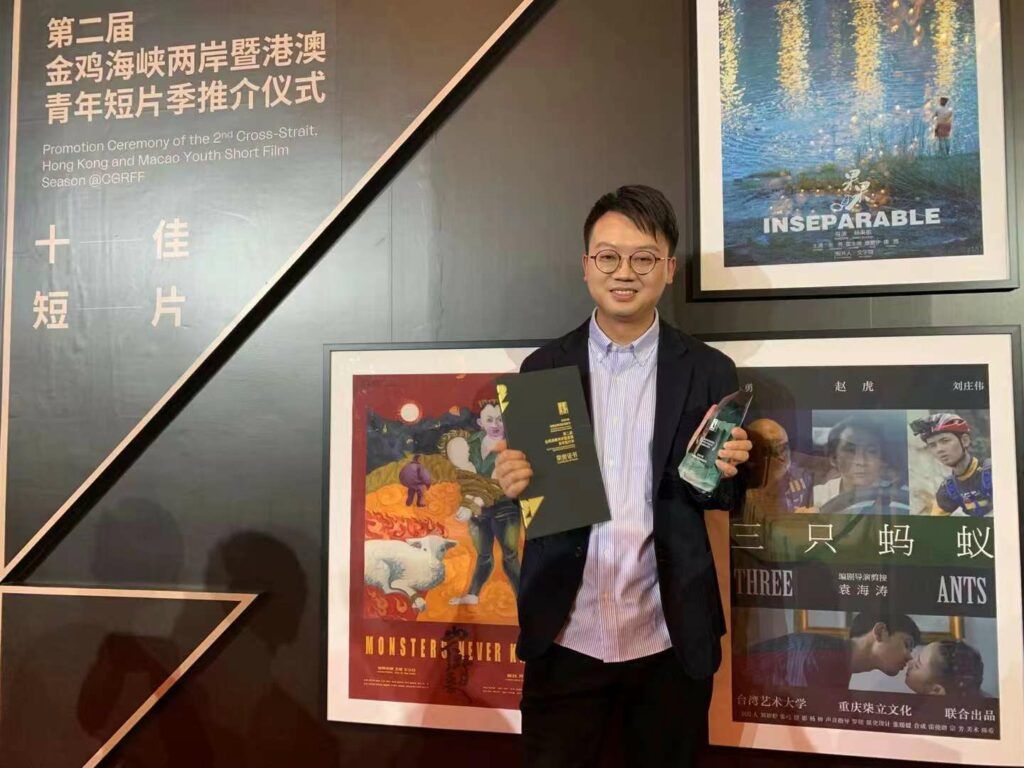
Young director Yuan Haitao
"Three Ants" is a suspense short film directed byyoung director Yuan Haitao, co-produced by Chongqing Qili Culture and National Taiwan University of Arts. At this year's China Golden Rooster and Hundred Flowers Film Festival, the film was honored as one of theTop Ten Shorts at the 2nd Golden Rooster Cross-Strait and Hong Kong & Macao Youth Short Film Season.
"Three Ants" has also been selected for multiple domestic film festivals, winning the Outstanding Short Film Award at the IM Cross-Strait Youth Film Festival, and receiving selections and nominations at the 2020 HiSHORTS Xiamen Short Film Week, the 3rd Chongqing Avant-Garde Film Festival (including Best Screenplay), and the 5th Ningbo International Micro-Film Festival (including nominations for Best Director and Best Screenplay).
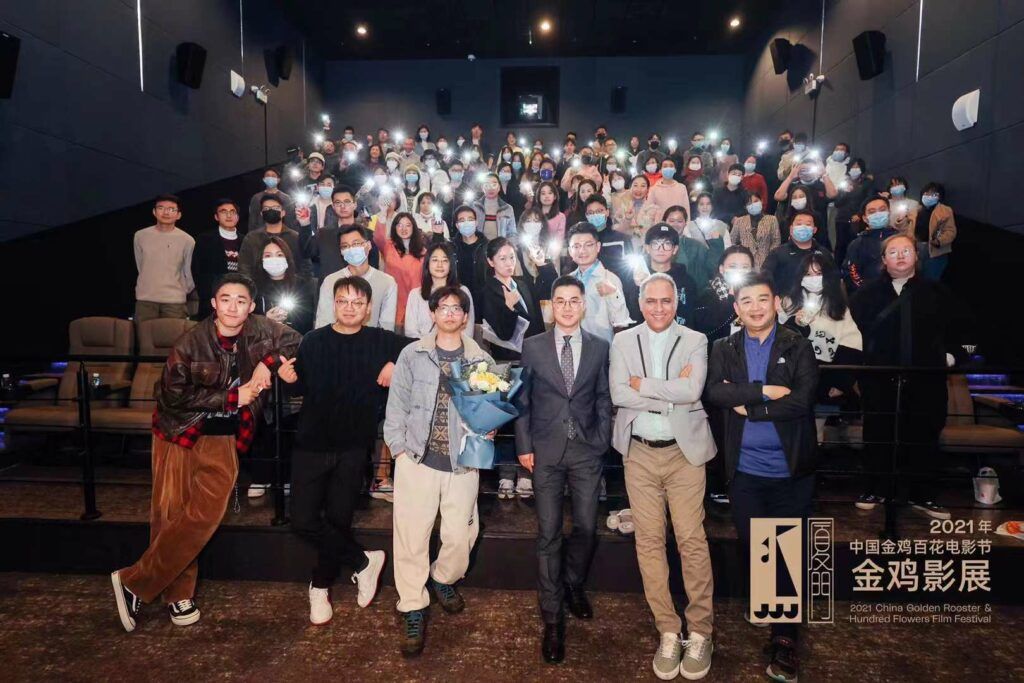
"Three Ants" receives Top Ten Short Film honor
The film's male lead is Mr. Zhao Hu—known for his role in the film "No Man's Land" and his performance in the hit web drama "The Chess Soul"—who is also an Associate Professor and graduate supervisor at Chongqing University's Meishi Film Academy. The cinematography was handled by Mr. Yang Shuai and Mr. Cheng Xiang from the Film Photography and Production program at Qingdao Huanghai University.
We'll explore the "Three Ants" production through DP Yang Shuai's cinematography notes—understanding this award-winning short film from the ground up.
How was this multi-festival award-winning short film born?
Before shooting this short, Director Yuan Haitao had been developing a feature film. Due to unforeseen circumstances the feature project stalled, and Director Yuan quickly adapted the short film script from the feature screenplay in a very short time.
The short film is structured around three groups of characters and three stories, filled with absurdism and dark humor. For the visual style, I wanted to be asstylized as possible while maintaining a sense of realism. The film uses a chapter-based narrative structure, telling the story through different characters' perspectives. The highway chapters use a2.4:1 aspect ratio, while the other scene chapters use4:3.
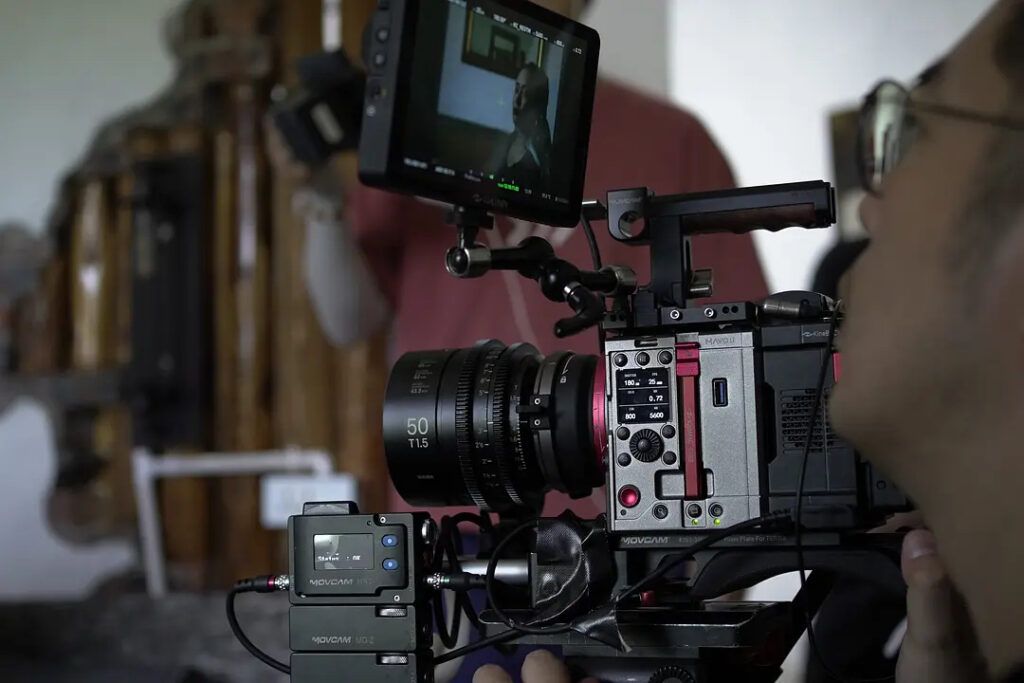
"Three Ants" production BTS
Choosing a full-frame cinema camera: MAVO LF
This is a suspense road movie set primarily on a mountain road, so we wanted to better handle the relationship between characters and space—making the perspective as wide as possible and revealing more of what lies within the depth of field. From the start of production we decided to abandon the S35-format cameras we had always used and shoot for the first time on afull-frame cinema camera. During prep we tested the mainstream full-frame cinema cameras on the market, and after considering overall budget, post-production latitude, and other factors, chose the best value option:Kinefinity MAVO LF.
Having experience with the MAVO 6K and TERRA 4K, we already had strong confidence in Kinefinity cameras. Considering that the shooting locations were primarilyreal-world road exteriors, with lighting primarily relying on available sources,demands on the camera's light sensitivity were relatively high. Before shooting we ran a round of camera tests—shooting multiple takes at different ISO settings without any artificial lighting—and were pleasantly surprised: images at high ISO remained incredibly detailed, with no widespread noise, excellent shadow detail control, and very natural highlight rolloff. This proved crucial throughout the shoot, significantly improving efficiency and saving substantial cost.
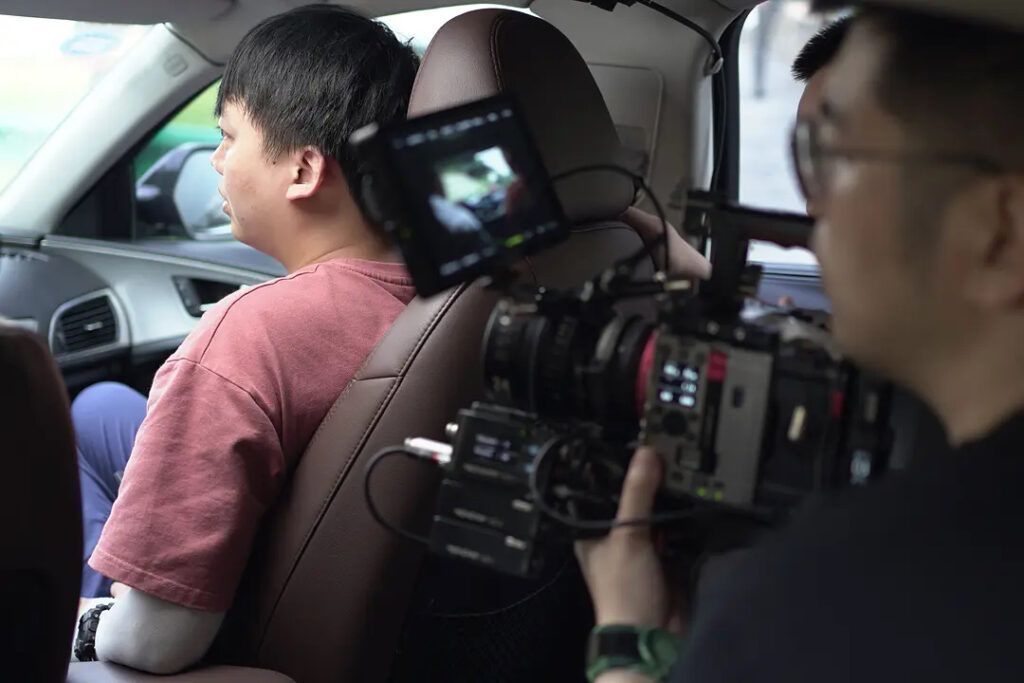
"Three Ants" car shoot BTS
The main location of "Three Ants" is a mountain road in Chongqing's Ba'nan District. I used a large number ofreal car-mounted shots throughout the film, which posed certain challenges to the camera'sstability. As it turned out, Kinefinity demonstrated excellent stability—especially during long takes, the camera continued to perform reliably. I also employed a large number ofhandheld and shoulder-mounted shots—camera movement directly shapes the film's overall visual rhythm. In managing this rhythm, I wanted the camera's movement to merge seamlessly with the actors', as if camera and performers were dancing together, so that camera motion wouldn't feel forced. I didn't want too many visible 'camera moves' in this film—I wanted audiences to focus more on the performances and the story itself.
The MAVO LF body weighs 990 grams.The compact, lightweight body also reduces the physical load of extended handheld shooting—especially during tracking shots, significantly reducing cinematographer fatigue so more energy can go toward the filmmaking itself. Also, in many enclosed, confined spaces like car interiors, camera placement can be very challenging—fortunately the MAVO LF body measures 115×110×95mm, making it very convenient to maneuver inside vehicles.
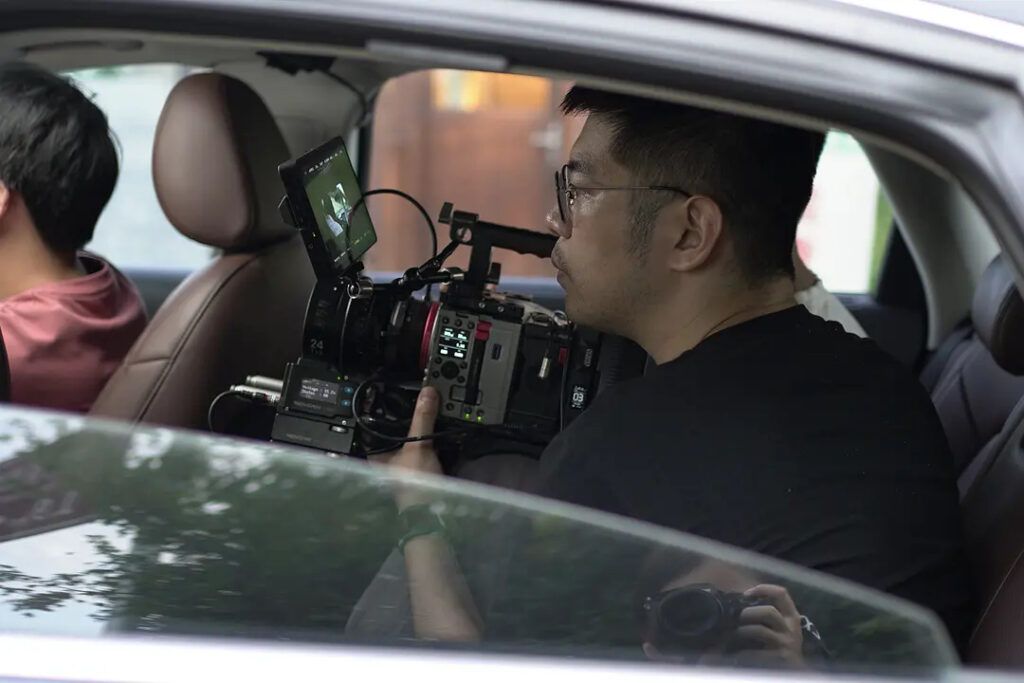
"Three Ants" car shoot BTS
Lens Choice and Lighting Style
Among many full-frame lens options, I ultimately chose five Sigma Cinema prime lenses: 14mm, 24mm, 35mm, 50mm, and 85mm. This was my first time using Sigma Cinema lenses—before shooting I ran a series of tests. The results were very surprising: they performed comparably to the established cinema lens brands I'd been using. Not only did they deliver cleaner images, but the wider angles, shallower depth of field, and greater sense of presence that large format brings were exactly the aesthetic qualities this story called for.
"Three Ants" production BTS
In terms of lighting style, I wanted to pursue the natural, unaffected feel appropriate for a realistic subject, so I used extensive natural light and kept artificial sources to a minimum. Especially in car scenes, I used the real-world environment's natural light as the key light for characters, with only small LED roll-flex strips as supplementary sources. The blend of natural and LED light also gave scenes more depth and dimensionality.
My overall lighting philosophy for this film was to use as few lights as possible—never add a second light if one can achieve the desired effect. This approach makes the images cleaner and more cohesive. At the same time, I asked the gaffer to help with more light reduction and blocking, giving the tonality greater richness and allowing the story's dark thematic nature to come through more strongly.
Finally, congratulations once more to "Three Ants" for being named one of the Top Ten Shorts at the 2nd Golden Rooster Cross-Strait and Hong Kong & Macao Youth Short Film Season, and we look forward to seeing more excellent work from Director Yuan Haitao.