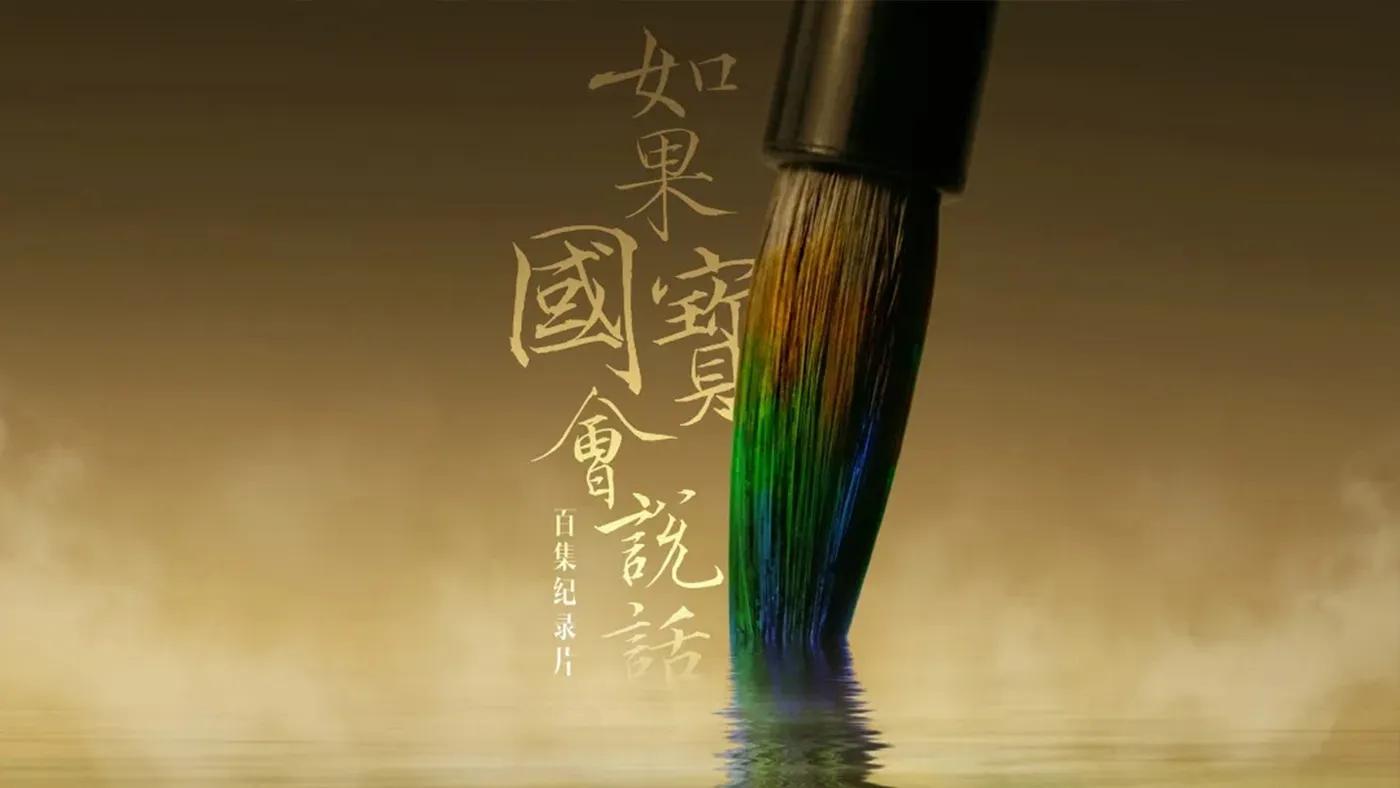
Interview with Chief Cinematographer Yang Mingyang of "If National Treasures Could Talk"
Nymph Scroll, tri-color glazed musician camel figurine
Six Steeds of Zhaoling, Famen Temple underground tea set
Silver-gilded ewer, gold-rimmed agate cup with beast head
…
Endless elegance of the Wei-Jin era, grandeur of the Tang
MAVO LF supports "If National Treasures Could Talk" Season 3
In bringing brilliant relics and magnificent national treasures to life
"If National Treasures Could Talk" Season 3 — Official Trailer
"If National Treasures Could Talk" is a cultural relics documentary produced by CCTV's Documentary Channel. Through 100 episodes of five minutes each, the production presents the craftsmanship, aesthetics, culture, and way of life of various historical eras from multiple perspectives.
Today, we have specially invited the documentary's chief cinematographer Yang Mingyang to share his experience of shooting China's national treasures with a Chinese-made camera.
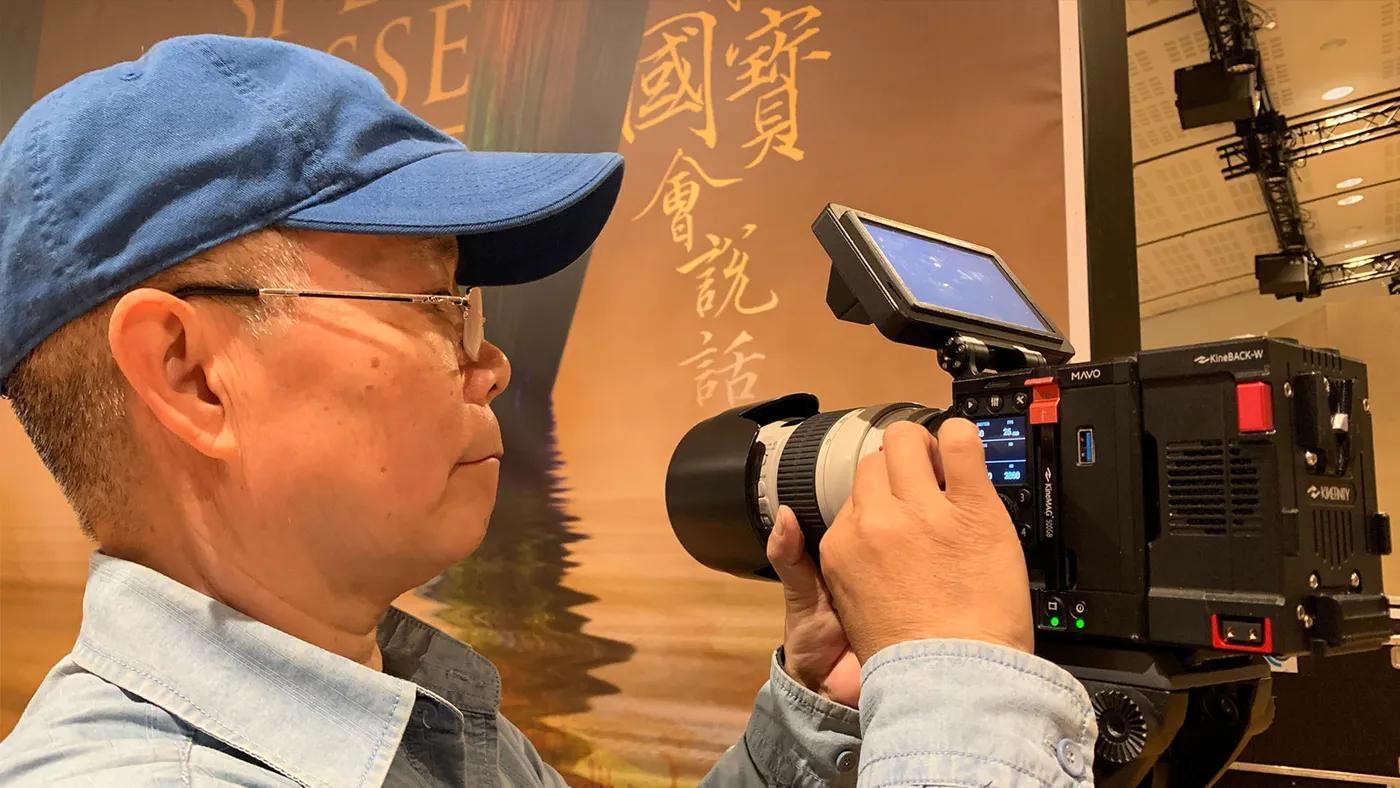
Yang Mingyang with the MAVO LF
Zhuoyao The national treasures embody a very long history, and this series presents these solemn artifacts in a witty and humorous way. How was the coordination between cinematography, directing, and post-production? How does the lens transform solemnity into playfulness?
Yang MingyangDuring the shoot, we operated on a principle of equal-eye-level engagement—not seeking unusual camera angles, but objectively presenting the artifacts themselves, showing as much detail as possible. I used macro lenses extensively, creating a visual sense of closeness and tactile intimacy. Cinematography and post-production are complementary to each other. Although the narration scripts chose some fresh and unusual angles—using anthropomorphism and internet slang—the core of the program is serious. The wit and banter are a side dish, not the main course. The meticulous photography of the artifacts themselves and the rigorous historical research in post-production are the foundation of the series; the humor is the garnish.
Zhuoyao The national treasures can only be viewed from afar by ordinary people, and some must even be stored in sealed conditions. How did you go about filming them?
Yang MingyangThe process of transporting national-level cultural relics is extremely rigorous. Under the guidance of the National Cultural Heritage Administration and with the close cooperation of the various museums, our filming process did not cause the slightest damage to any artifact—we achieved safe filming throughout. Our principle for lighting the artifacts was to use reflected light as much as possible and avoid direct illumination. Aside from silk textiles, paintings, and calligraphy, most artifacts can be stored at room temperature and are not as fragile as people might imagine. Even so, we were extremely cautious during the entire filming process. For example, whenever we needed to adjust a camera position and the artifact needed to be moved even slightly, we would inform the museum staff in advance so that they could make the adjustment. When changing lighting setups, we would also relocate the artifact to a corner beforehand to avoid any potential effect of the lights.
Zhuoyao The film has distinctive characteristics—the lighting setup, lens selection, shooting approach, and color tone style. Can you tell us about each?
Yang MingyangDue to the shooting conditions, each museum visit was typically a very small team—just me with two assistants, a director, and sometimes a line producer. We'd finish one museum and I'd rush with my two assistants to the next one, where another director was waiting. So our equipment, including lights, had to be lightweight and portable to suit these conditions. The lighting setup was also very simple: one light stand, a reflective umbrella, and a news light. Most of the shooting was accomplished with this setup.
Regarding lens choice: I started with PL-mount cinema lenses, but later found the efficiency was relatively low—not well-suited to the fast pace the shooting required—so I switched back to EF-mount camera lenses. I generally use a 24-105mm lens primarily because of its versatile focal range, which reduces how often I need to change lenses and improves shooting efficiency. Because most museums give us limited shooting time, we have to capture as many artifacts as possible within the allocated window—wasting precious time fiddling with equipment is not an option. For detail shots, I use a macro lens most often, occasionally supplementing with a 70-200mm. Overall, it's always about choosing the right lens for the specific need.
As I mentioned, our shooting approach doesn't pursue unusual angles or exaggerated lighting. Instead, it aims to objectively present the artifacts themselves—letting audiences see details they wouldn't normally see even on a museum visit.
On color tone, the logic is the same as for the shooting itself: the goal is to faithfully reproduce the artifacts' own colors as accurately as possible. Personalized stylization is not appropriate.
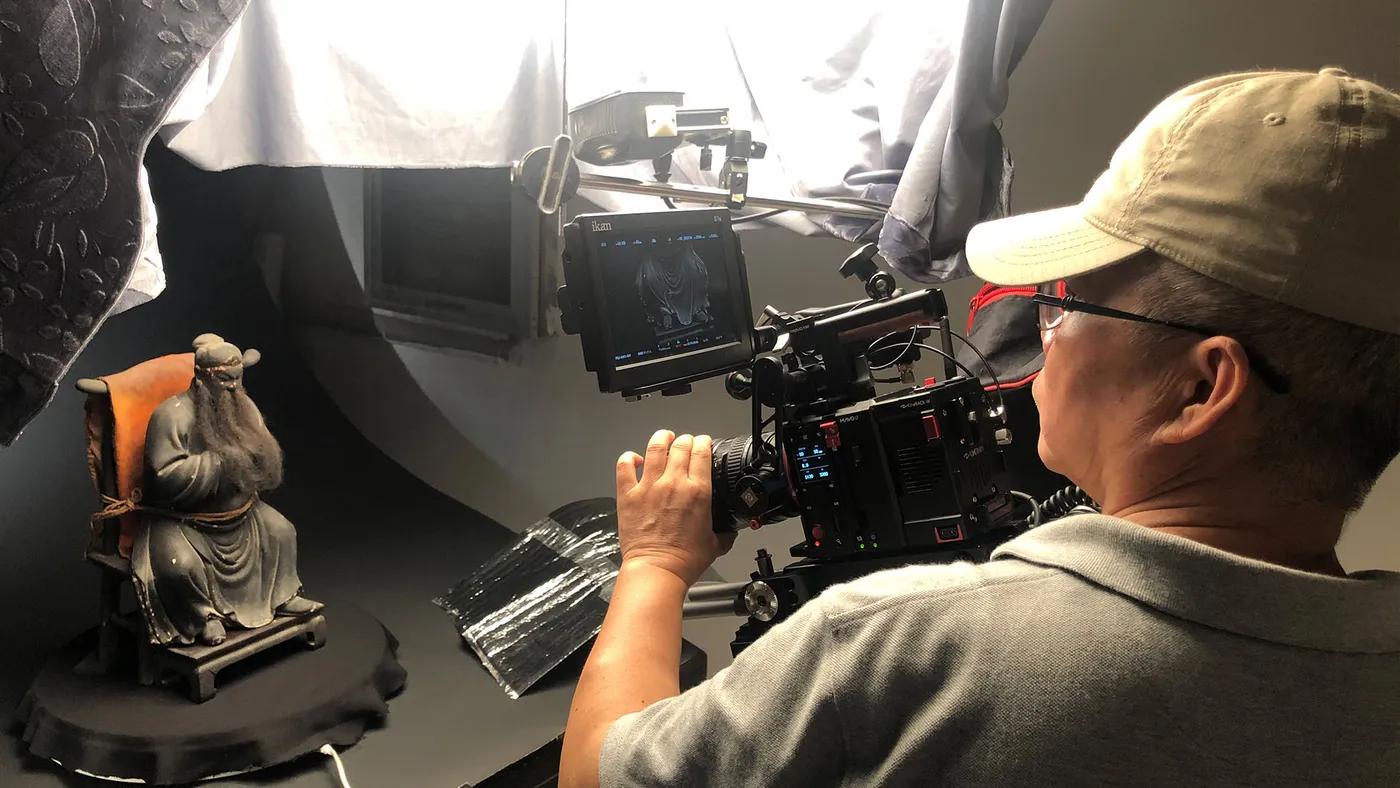
MAVO LF at work alongside the cultural artifacts
Zhuoyao Some national treasures are very sensitive to light—how did you handle lighting design?
Yang MingyangIndeed, some artifacts are sensitive to light, temperature, and humidity—which is one of the key differences between artifact filming and other types of production. Another aspect we can't fully control is the shooting conditions provided by the artifact department—specifically, the shooting location. They designate specific places for us; some artifacts cannot be removed from their display cases at all, and those that can be moved still cannot leave the exhibition hall—we have to shoot inside it. These spaces are often quite cramped with very little room to work. So when assembling the shooting team we have to fully consider these constraints—from crew size to camera equipment and lighting configuration, everything must be conducive to the safety of the artifacts. For lighting, unless absolutely necessary to use large fixtures, in most cases we use the simplest news light with a reflective umbrella. The light is soft, the setup is lightweight and flexible, easy to move, quick to rig under time pressure, and easy to relocate. The results are exactly what you see in the series.
Zhuoyao In the series' introduction, we see that the production team traveled across the country. Over such a long filming period, what experiences and insights did you gain?
Yang MingyangThe longer the shooting period, the greater the toll on the crew, especially when you sometimes have to wait for the museum to coordinate internal logistics—the crew must accommodate the institution's schedule and make time compromises. But it's precisely this kind of situation that gives the crew an opportunity to learn. Because the artifacts are fragile, you must adapt to a 'slower pace.' And when the pace slows down, you find yourself carefully observing the patterns, shapes, and forms of the artifacts—and you feel a sense of calm and wellbeing. Culture itself can bring inner peace, and you feel this through the filming work. For me personally, through filming these national treasures, I gained a very precious opportunity to learn—developing a new understanding and appreciation of Chinese history, culture, and civilization.
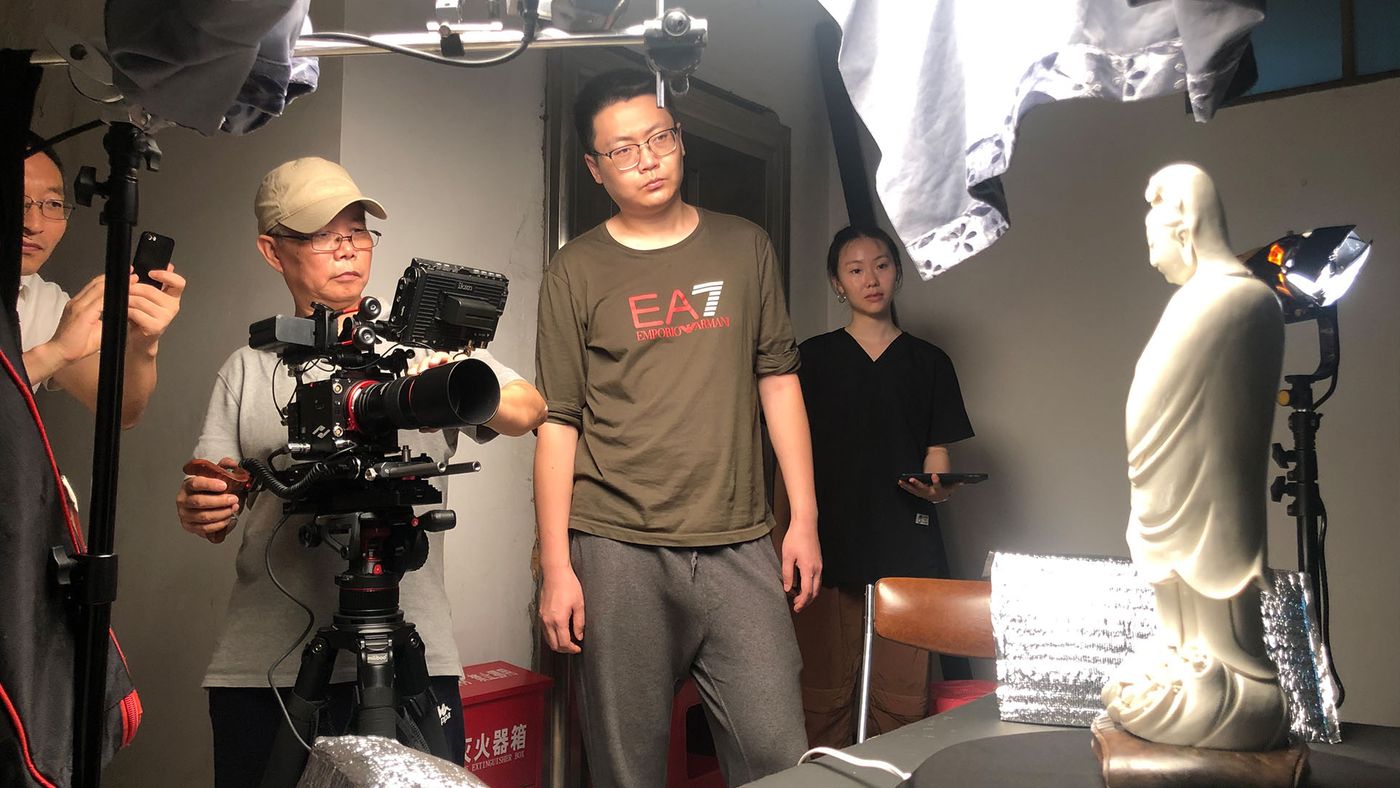
MAVO LF at work alongside cultural artifacts
Zhuoyao We're curious about how your visual style developed. Can you tell us about your career background?
Yang MingyangThat's a long story—my career path was fairly complex, you could say I came to cinematography by a winding route. After graduating high school in 1975, I went to the countryside as a farmer, then joined the military and went to war. After three years, I was demobilized and went to work in a factory as a laborer. (These three life experiences later became an extremely valuable resource for my documentary filmmaking.) During this time I started teaching myself photography. In late 1985, I transferred to a school to do audiovisual education work, shooting television teaching films—this was when I officially became a professional shooter. In early 1994, I was recruited to Sichuan Television as a cameraman, beginning my career as a professional cinematographer. In October, I was recruited to CCTV's "Half the Sky" program as a cameraman. In 2001, I transferred to the "Oriental Time and Space" documentary unit, doing documentary cinematography.
After CCTV-9's Documentary Channel was established, I primarily shot documentaries for the channel. Some of my major works over the years include: "Revolutionary Ideal — Yang Hanxiu," "Ba River Bridge," "The Forbidden City," "Taipei Palace Museum," "Dunhuang," "Summer Palace," "Gardens," "The Bund," "Thousand Years of Bodhi Road," "Mei Lanfang," "600 Years of Kunqu Opera," "A Century of Automobiles," "Memories of the Expo," "Revelation of the Lion City," "From Tragedy to Triumph," "Peking Opera," "If National Treasures Could Talk," "Songs of the Past," "China's Anti-Poverty Code," among dozens of documentary series. Several of these have received Best Documentary, Best Cinematography, and Five One Project Awards.
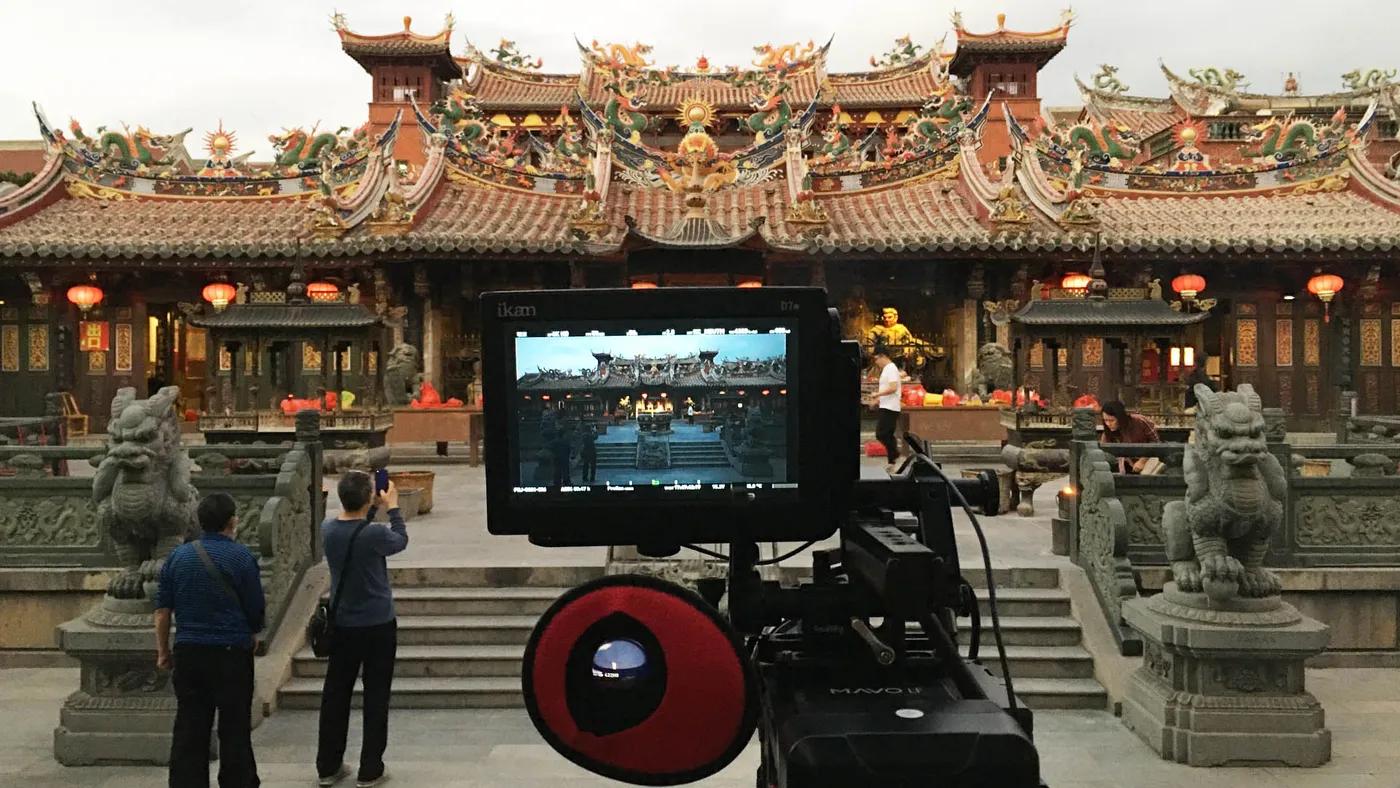
MAVO LF on the set of "If National Treasures Could Talk" Season 3
ZhuoyaoWhy did you choose Kinefinity's MAVO LF for this production? What characteristics made it the primary camera?
Yang MingyangChoosing the Kinefinity MAVO LF was actually rather serendipitous. While shooting "If National Treasures Could Talk" Season 2 at the Shaanxi History Museum, one of the directors, Zhu Jie, said he had borrowed a Kinefinity MAVO LF camera and asked me to try it. When I first picked it up, my immediate impression was: incredibly light. Having been using a RED camera at the time, the MAVO LF's size and weight were dramatically smaller and lighter by comparison. And looking at that enormous CMOS sensor inside such a compact body was almost comically disproportionate.
I actually had some earlier knowledge of the Chinese-made Kinefinity brand. Going way back to Kinefinity's first-generation HD camera—I remember the year the Sony F3 came out, I saw the 'Chinese-made' camera at the National Exhibition Center trade show. Honestly, my impression at the time was that the machine was 'clunky and oversized.' I never imagined I'd have such a completely different opinion a few years later. After not seeing them for a while, what needed to get smaller had shrunk (the body), and what needed to get bigger had grown (the CMOS)—it was a complete transformation, like watching a duckling become a swan.
As a camera designed and built to cinema industry standards, its technical specifications obviously far exceed what television requires. In particular, its dual native ISO combined with 6K oversampling dramatically reduced the lighting demands. Clean and perfect image quality better showcased the details and textures of the artifacts. The compact body was also easier to mount on lightweight motorized sliders. The precision motion of the electronic slider, combined with the perfect imagery of the MAVO LF, brought audiences a different kind of visual experience. Since that shoot in Xi'an, I've felt that the Kinefinity MAVO LF has added a powerful tool to documentary filmmaking. Its configuration is adaptable from lightweight to full-rig, flexible and convenient, and the high-sensitivity, low-noise image quality is very well suited for documentary work. In my use of it, many colleagues who saw it expressed great interest, and I've introduced Kinefinity to them as well—something the Kinefinity engineers probably didn't expect. Whatever the case, now whenever a new documentary project begins, the Kinefinity MAVO LF is always the first camera I think of. I feel it suits me, it suits documentaries. What suits you is always the best choice.
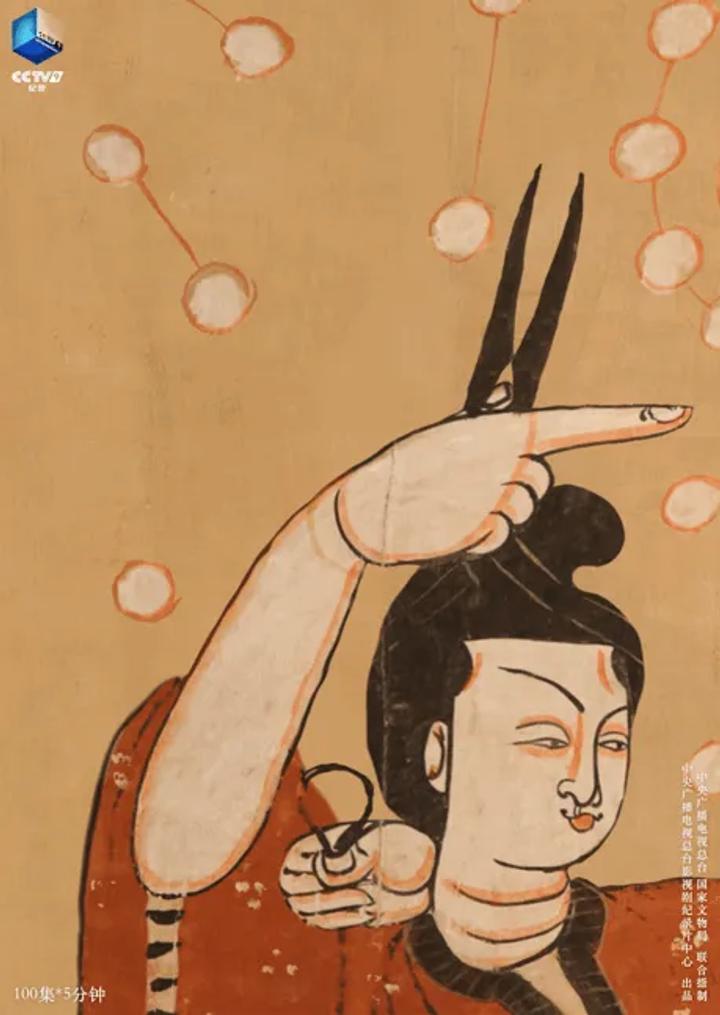
"If National Treasures Could Talk" Season 3 official poster
ZhuoyaoHow does the Kinefinity camera perform for overcranked and undercranked shooting? Does it meet creative needs?
Yang MingyangOverall, the variable frame rate experience is quite good. Documentary work may actually have higher slow-motion requirements than narrative films in some respects, but the current Kinefinity cameras have no problem satisfying the majority of documentary variable frame rate needs. At least that's been my experience.
ZhuoyaoWere there any particular challenges during filming? How were they resolved? How did the camera help overcome them?
Yang MingyangSo far there have been no major difficulties—and whatever difficulties did arise were not due to any camera problem. If I had to name a challenge, it would be that some museum exhibition halls have very low ambient light levels, making it difficult to shoot wide shots of the whole hall without bringing in your own lights, which risks disrupting the hall's existing atmosphere. This is where the Kinefinity camera's ISO 5120 really showed its value—it effortlessly met the demands of low-light filming.
ZhuoyaoDocumentaries have very high standards for image quality and color. Did the camera meet those requirements?
Yang MingyangFor a cinema camera designed and manufactured to cinema industry standards, meeting documentary image quality and color requirements is absolutely no problem for a Kinefinity camera. That's also the main reason I've recommended the Kinefinity MAVO LF to many of my colleagues and peers.
Finally, let's revisit the exquisite imagery from all three seasons of "If National Treasures Could Talk," and appreciate the splendor and wonder that these national treasures bring to us.
"If National Treasures Could Talk" Season 3 "If National Treasures Could Talk" Season 1 "If National Treasures Could Talk" Season 2
Many thanks to Yang Mingyang for sharing his experiences with us. We are also deeply honored: China's brilliant national treasures can now be presented to audiences through cameras made in China.