Behind the Scenes of the FIRST Training Camp: "The Sunshower Incident"
"This was my first time using a Chinese-made camera, and Edge gave me a very big surprise. Beyond the easy-to-grade footage and excellent highlight retention, its lightness and compact size are even revolutionary—absolutely perfect."
DP Zhu Yiyao, FIRST Training Camp's "The Sunshower Incident"
A humble, honest taxi driver—Old Gao, one of the urban working poor—has always endured in silence and kept himself in check. But when a series of "sunshower events" repeatedly interrupts his need to use the restroom, Old Gao's long-suppressed moral code finally cracks, and all the bottled-up frustrations of the working class are unleashed without restraint...
On the set of "The Sunshower Incident," DP Zhu Yiyao—using a Chinese-made camera for the first time—worked alongsideKinefinity camerasalso making their first appearance at the FIRST Training Camp, completing the camp's most location-heavy and scenically diverse short film.
"As a female DP, I actually found myself shooting a film filled with a male-coded perspective. It put me in battle mode—very challenging."

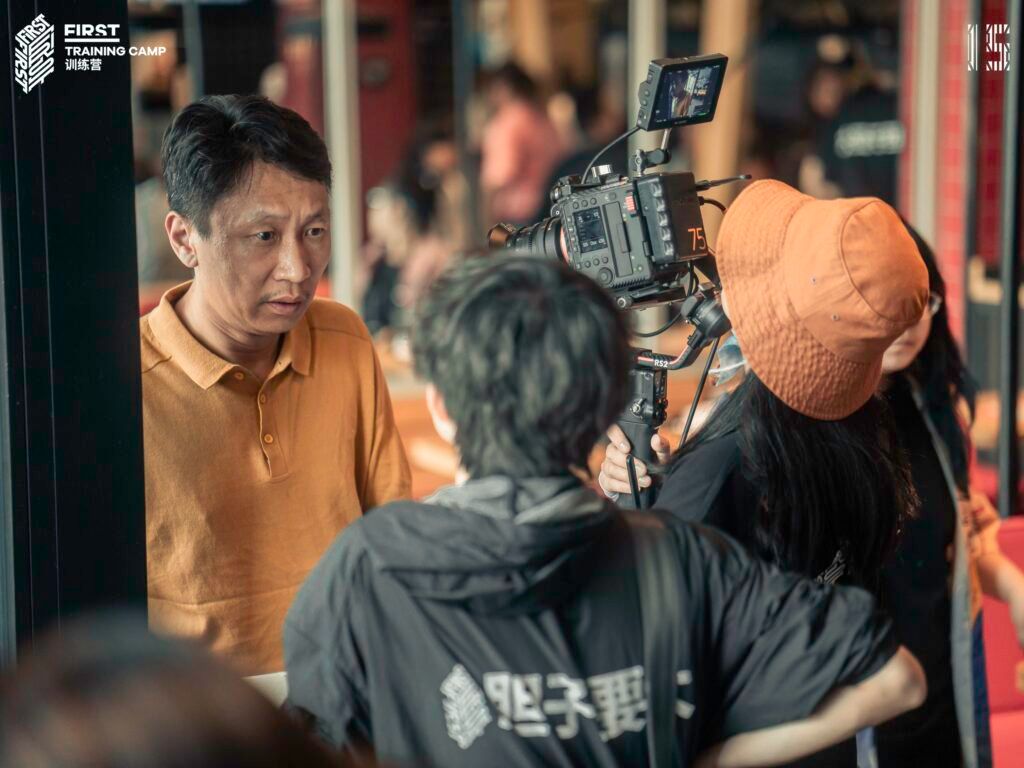
"The Sunshower Incident" actor Wang Zichen with DP Zhu Yiyao
Zhuoyao What was your reaction when you first read the script? What shooting ideas did you have?
Zhu Yiyao I was quite excited after reading it—the narrative arc was already fairly well developed. The film's overall effect is about conveying a physical sensation of desperately needing to use the restroom. If the audience also feels that discomfort, then I'd consider the cinematography a success.
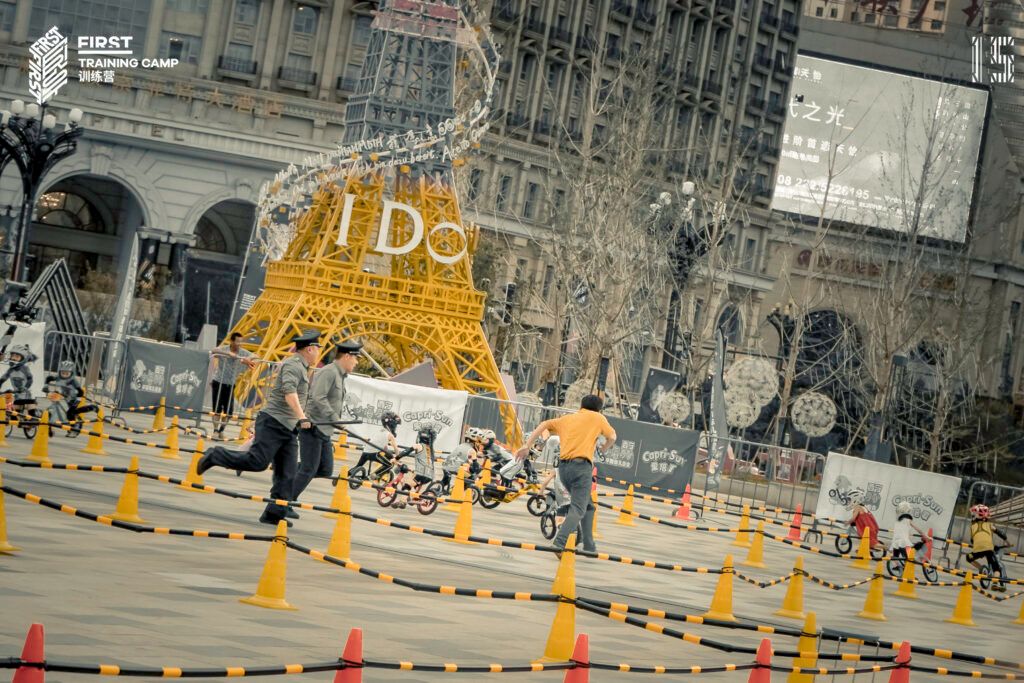
"The Sunshower Incident" filming on set
I had two main ideas. One was that thecolor palette should be slightly more vivid, to create visual stimulation for the audience. The other was what the script demanded of cinematography. Because there were many different locations and a lot of tracking shots,a gimbal was definitely going to be needed. Beyond that, I wanted the images to havea fairly deep depth of field, with the lens as close to the characters as possible. Paired with a stylized visual treatment, this would let the audience directly feel the character's physical discomfort—which also meant wide-angle lenses. Fortunately, most of these ideas were ultimately realized.

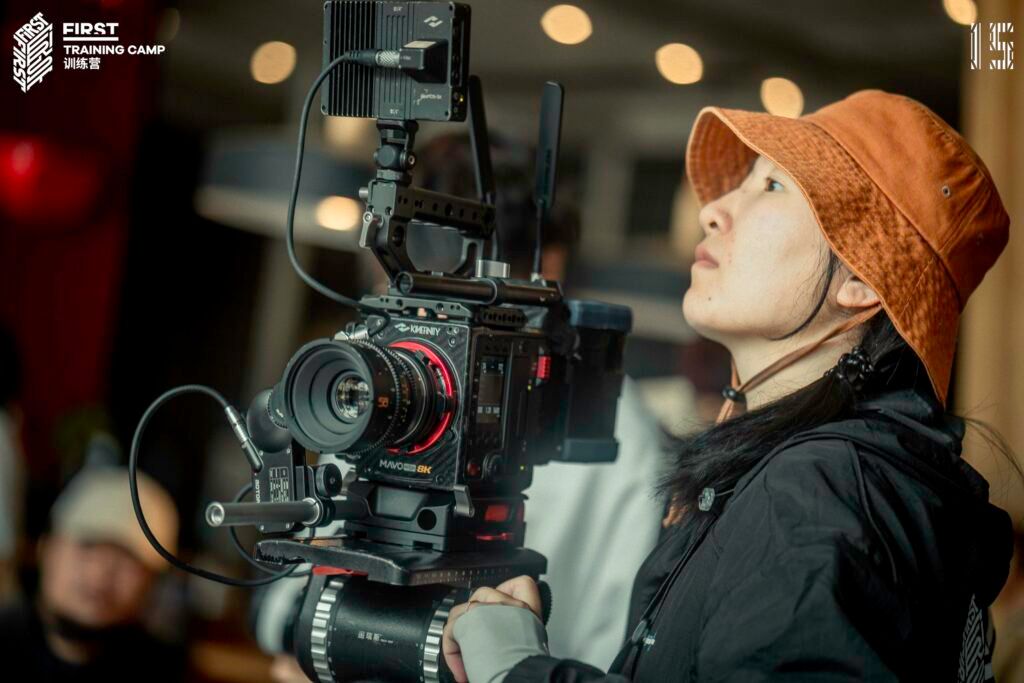
DP Zhu Yiyao with the MAVO Edge 8K
Zhuoyao What lenses and shooting parameters did you use?
Zhu Yiyao For lenses I used the Zeiss Loxia set: 21mm, 35mm, 50mm, and 85mm at f/2–f/2.4—very small lenses, making it very difficult to use a conventional matte box.That's where Edge's built-in ND was genuinely very convenient. Since all scenes were daytime, ISO was primarily set at 800.
For resolution, I mostly shot in 4K. The only exception was one shot from a rooftop looking down, for which I used 8K—because the director wanted a slightly humorous digital zoom quality in this scene, and at the time we had limited equipment and no time to install a zoom lens, so we used 8K and zoomed in digitally in post.
For the aspect ratio, I chose 4:3. We wanted a consistent visual style, and less important information could be excluded from the frame. Additionally, this film is primarily about expressing how the environment around the character creates a sense of oppression, so 4:3 became the right way to control the image.
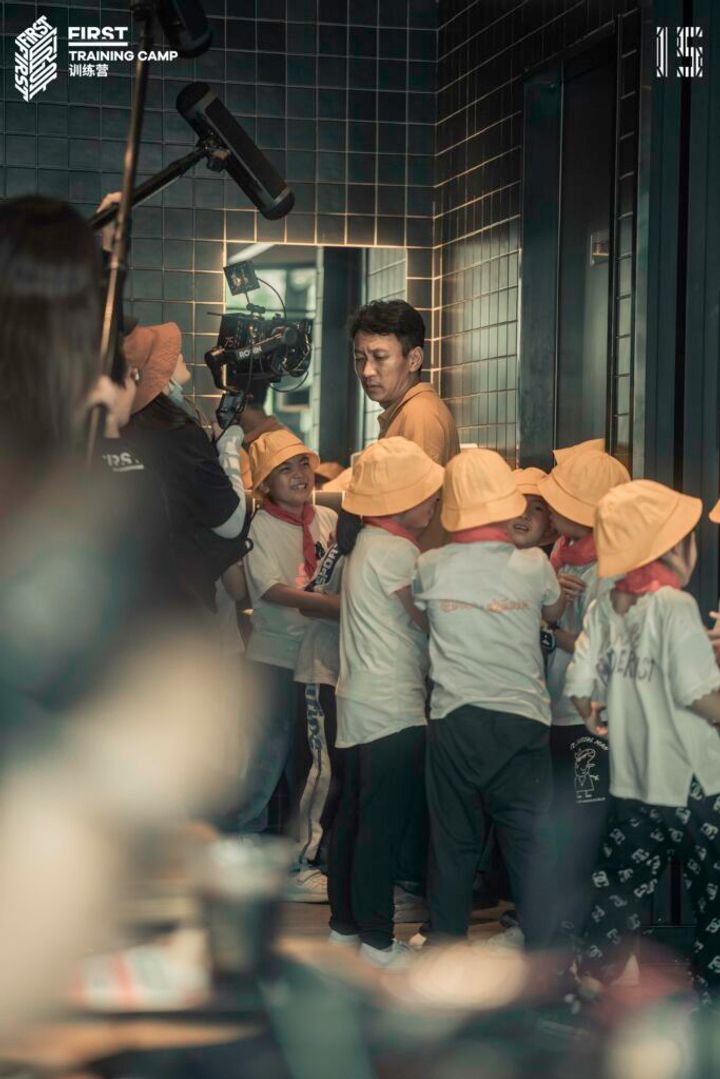
"The Sunshower Incident" actor Wang Zichen with DP Zhu Yiyao
Zhuoyao The script involves so many different locations, and the shoot was only three days. Did Edge help you overcome any particular challenges or environmental constraints?
Zhu Yiyao The biggest help Edge gave me was definitely its lightness and compact size. Before the shoot I had actually mentally prepared to do the entire thing shoulder-mount—I never expected that Edge could mount on the DJI RS 2. That was genuinely a huge surprise for me—almost felt revolutionary, absolutely perfect. This shoot involved a lot of running sequences that needed a gimbal, and I was able to get through all of them with ease—that really has to becredited to Edge's weight balance.
For example, in some scenes I needed to move freely through a shopping mall while crowds of bystanders gathered all around—there was no way to use a large stabilizer. If we had used a slightly heavier camera that couldn't mount on the RS 2, these shots would have been impossible to achieve. Going purely shoulder-mount, the image would have been too shaky and I couldn't sustain it for long, so the combination of Edge's lightweight design and this compact lens setgave me enormous additional freedom—letting me shoot handheld for long stretches in many more types of environments, like very narrow corridors or inside vehicles. It was genuinely very easy.
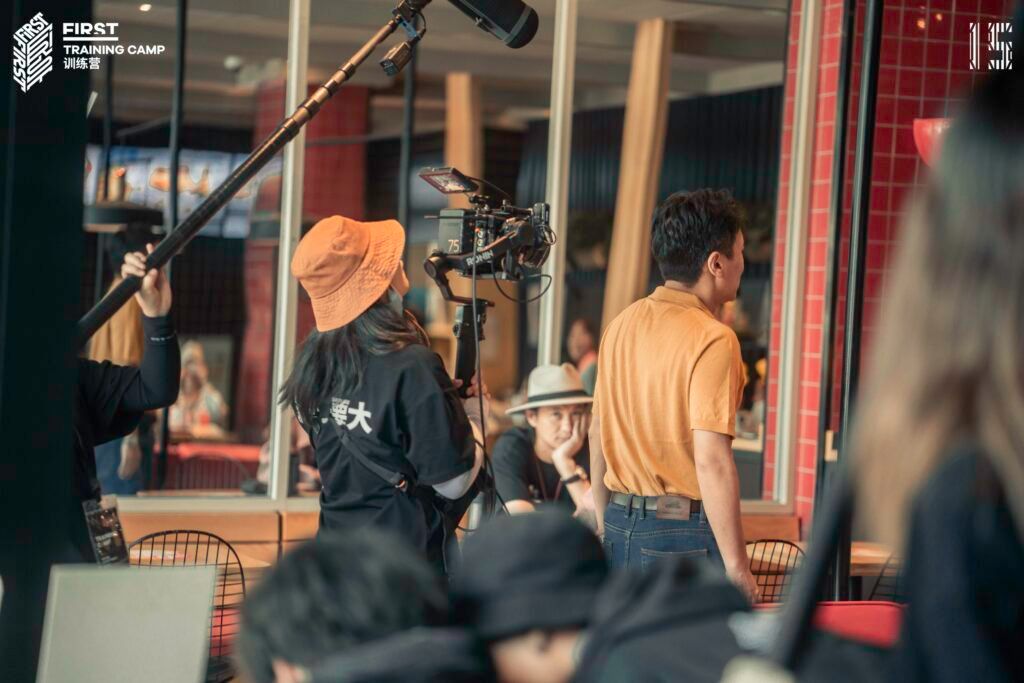
"The Sunshower Incident" filming
Zhuoyao You mentioned the built-in ND brought a lot of convenience—can you describe that specifically?
Zhu Yiyao Since the shoot was basically alldaytime exterior scenes, ND was absolutely essential. The Zeiss Loxia lenses are already very difficult to attach a matte box to—without built-in ND it would have been a really terrible situation.
Another point: I wanted to achieve a fairly deep depth of field throughout, which meantconsistently maintaining an aperture of f/11—letting the environment create the sense of physical discomfort rather than relying solely on the actors' performance, so both the environment and the characters always need to be in focus. This is established right in the film's very first scene: a row of clocks hanging at the bathroom entrance, with a wide angle filling the entire frame with clocks, then placing the character among them to create a sense of oppression. So if you're maintaining f/11 across many different scenes and lighting conditions, you definitely need ND a lot of the time.
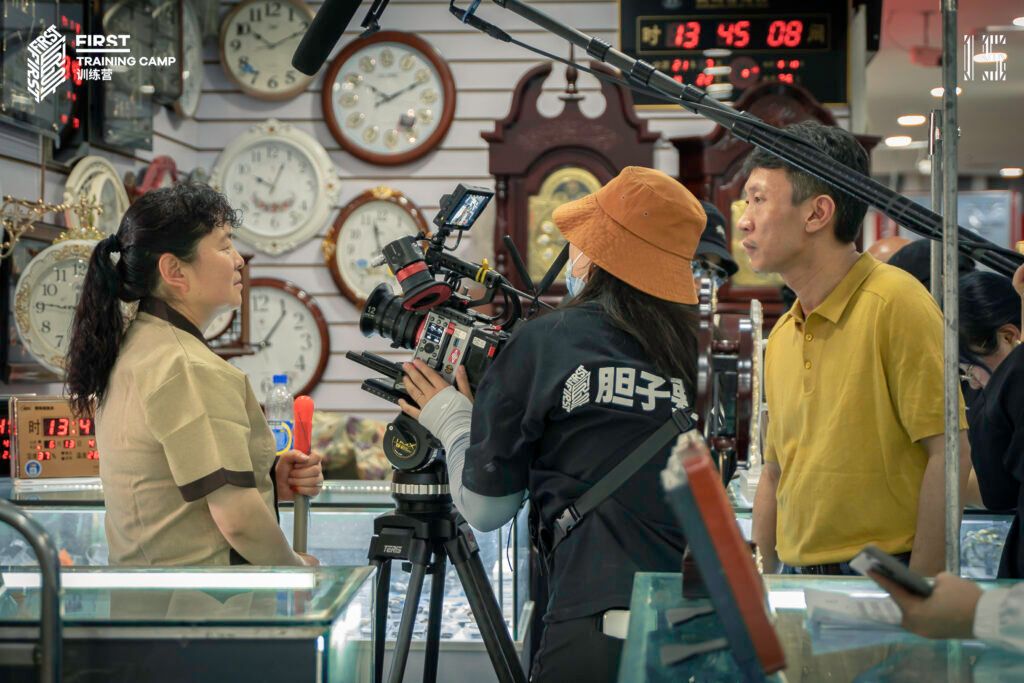
"The Sunshower Incident" filming

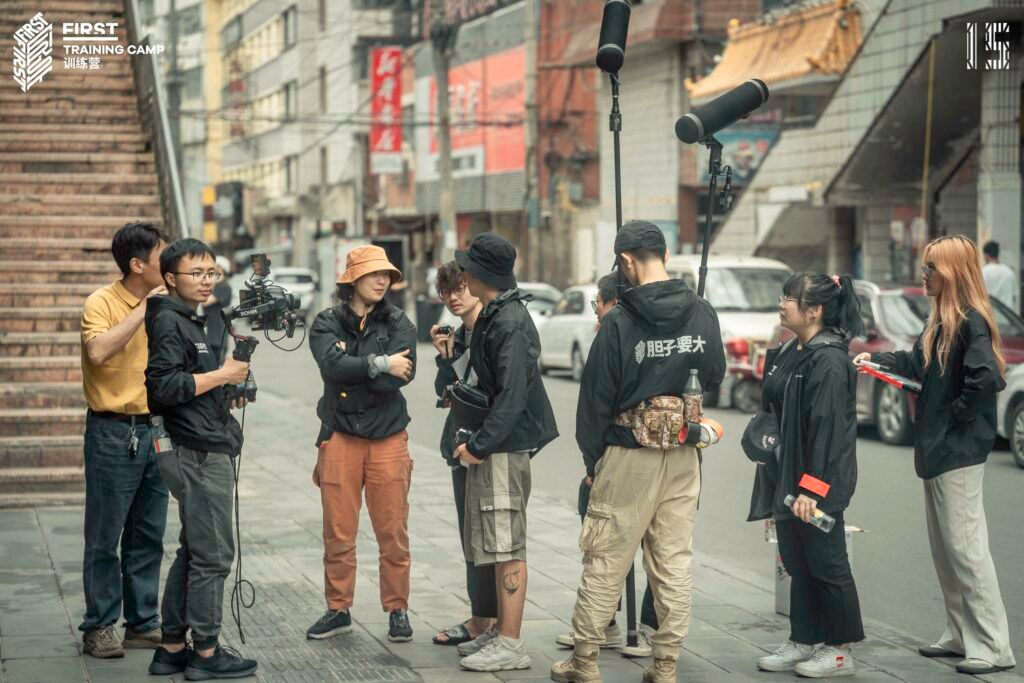
"The Sunshower Incident" filming
Zhuoyao How did the final film turn out? Did the colorist have any feedback?
Zhu Yiyao We shot around 130 scenes in total, grading over 200 cuts. No issues were encountered at all, and we finished the grade in 12 hours—it should have been the fastest grading in the whole camp. This was my first time using a Chinese-made camera, and I found Edge's footagevery easy to grade, with excellent color handling.For example, when separating skin tones from other elements, the workflow moved very quickly. That's genuinely done very well!
I had a lot of in-car scenes, so I had calibrated my exposure for the darker interior shots—and I was initially very worried that the exterior highlights would be completely blown. But Edge's highlight retention was excellent: except for a few extremely white scenes, everything else could be pulled back. And the images I shot had absolutely no noise at all—that was a genuine surprise.
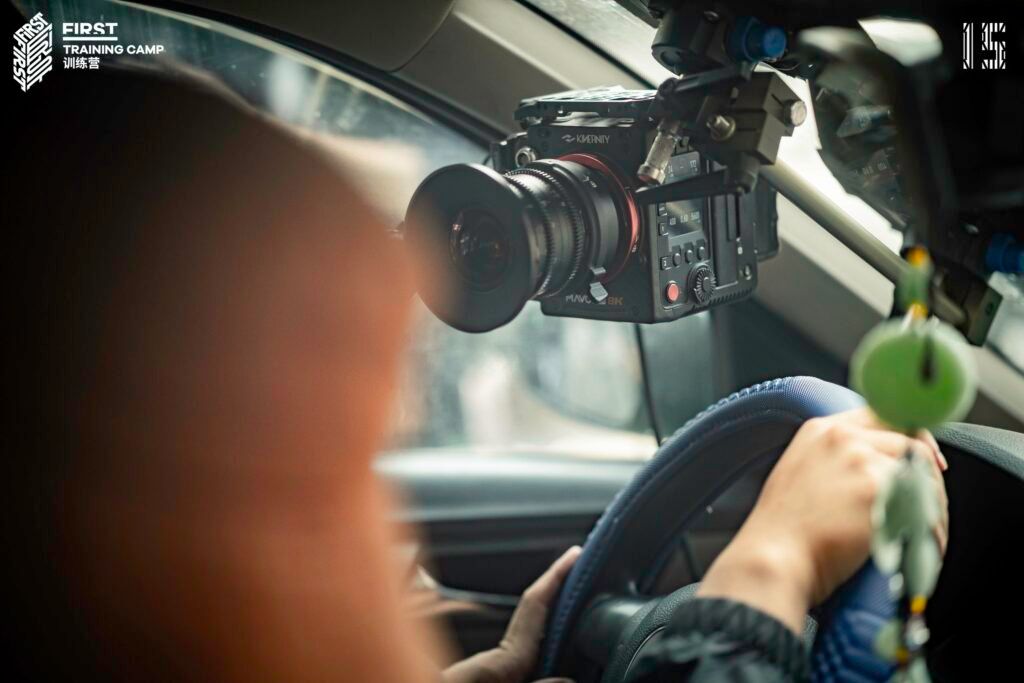
"The Sunshower Incident" in-car filming
Regarding color grading, I really want to talk about the most important scene in the entire film—the toilet ribbon-cutting ceremony. This scene was actually shot at noon with the sun directly overhead—extremely high contrast. But that happened to match exactly what we needed. I wanted the film to feel absurd and exaggerated, with vivid colors and sharp lines—like a Yue Minjun painting, where skin tones are pushed toward purple. I had mentioned this in my cinematographer's statement. So in post, beyond adjusting the highlights, the main work wascolor grading the skin tones—gradually shifting from relatively normal in the early scenes to increasingly purple toward the end. This is most extreme in the toilet ribbon-cutting scene: very hard lines, very wide angle, skin tones pushed to their most purple state. The colorist found the skin tone work straightforward to execute and was very satisfied with the completeness of the result.
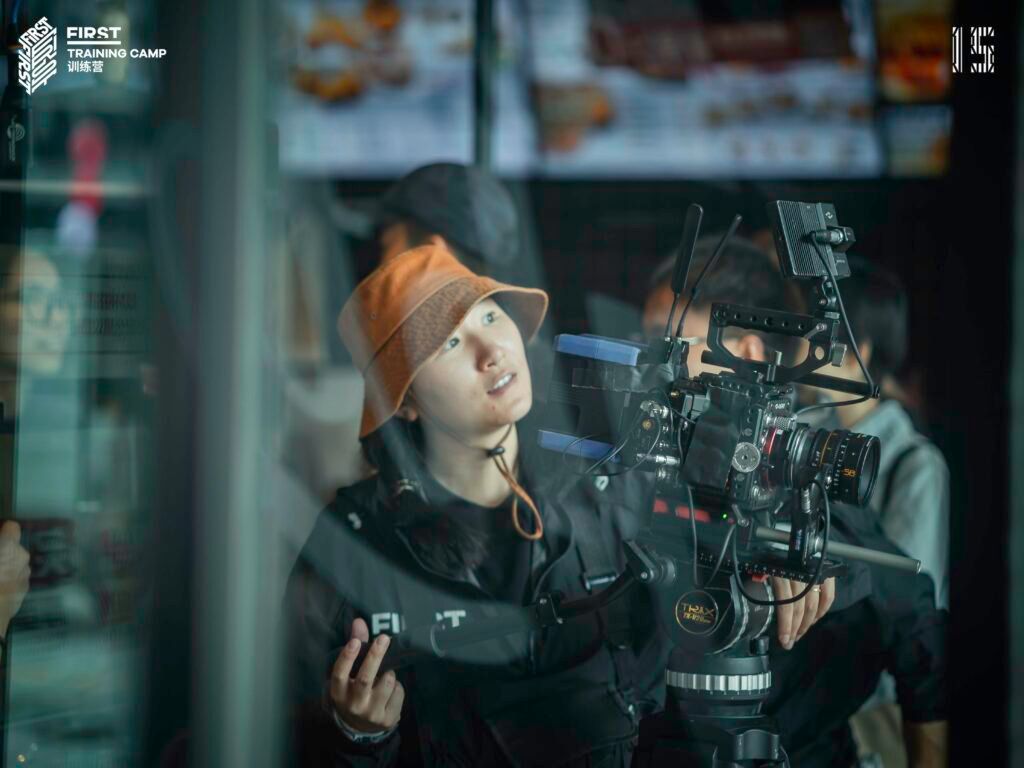
DP Zhu Yiyao with the MAVO Edge 8K
Zhuoyao What were your particular impressions from this three-day FIRST Training Camp experience?
Zhu Yiyao There was one scene that was especially satisfying—the fountain scene. People might say 'shooting so many scenes in three days, how exhausting'—but as a DP, because each scene has its own interesting character, when you manage to shoot everything you set out to get, it's incredibly gratifying and fulfilling.
For this scene, I had to shoot inside the fountain while water shot up from the ground below, essentially hitting me from underneath—which gave me a physical push and made normal camera operation almost impossible. So in this case, my secondary camera operator—also my good friend Edward—rigged up a special setup: a wooden board hung around my neck, with a plastic D-cup bra threaded through the board and tied around my body to deflect the upward water flow, and the whole apparatus wrapped up over everything.
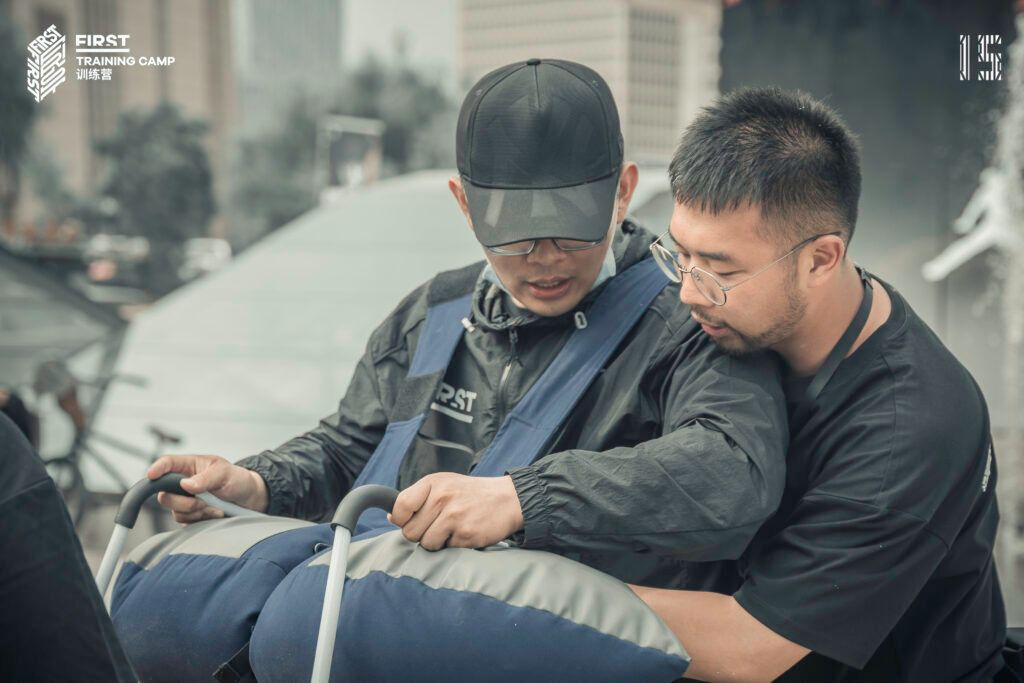
"The Sunshower Incident" crew's fountain scene equipment
We were racing to catch the golden hour light, so time was very tight—but inside the rig, the air was incredibly thin, making it almost impossible to breathe, and the screen was barely visible. The rain wiper in front of the lens was also fogging up and not performing as hoped. We almost gave up on the shot entirely.
In the end I shot it bare—just a Black Pro-Mist filter held in front of the lens. We got two good takes and completed the shot.
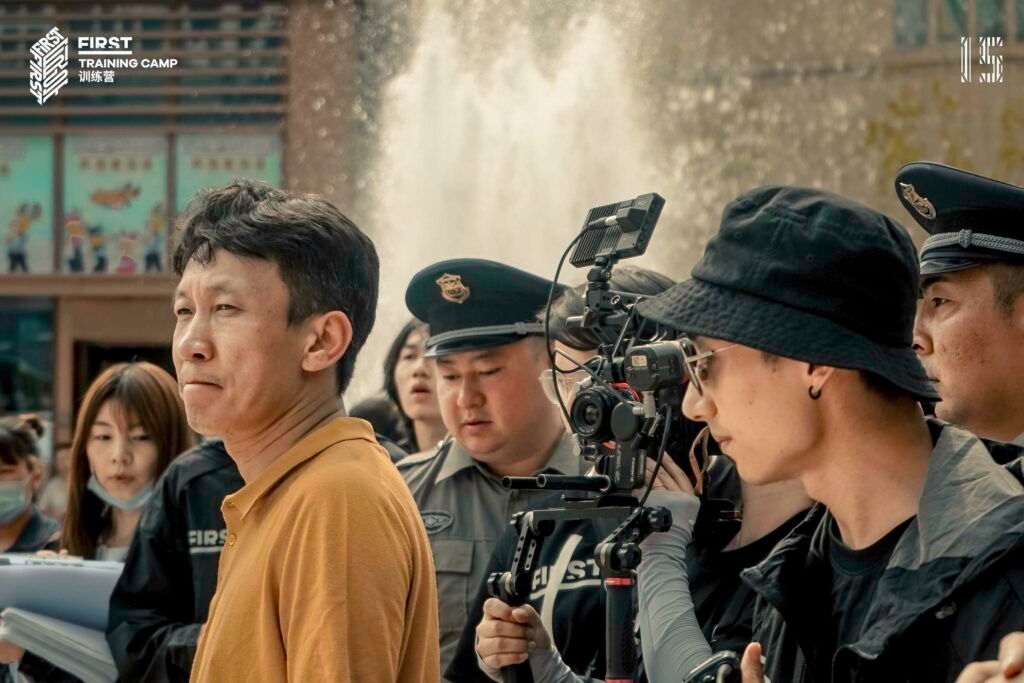
"The Sunshower Incident" filming
Participating in this FIRST Training Camp was incredibly invigorating. My previous work tended to be more delicate and emotionally nuanced in style, but this time I had to shoot something fast-paced—not heavy or somber, but more interesting, even slightly comedic.
As a female DP, I found myself shooting a film filled with a distinctly male-coded perspective. It put me into battle mode—very challenging. But because my communication with the director was very smooth and he trusted me completely, I feel I did a good job.
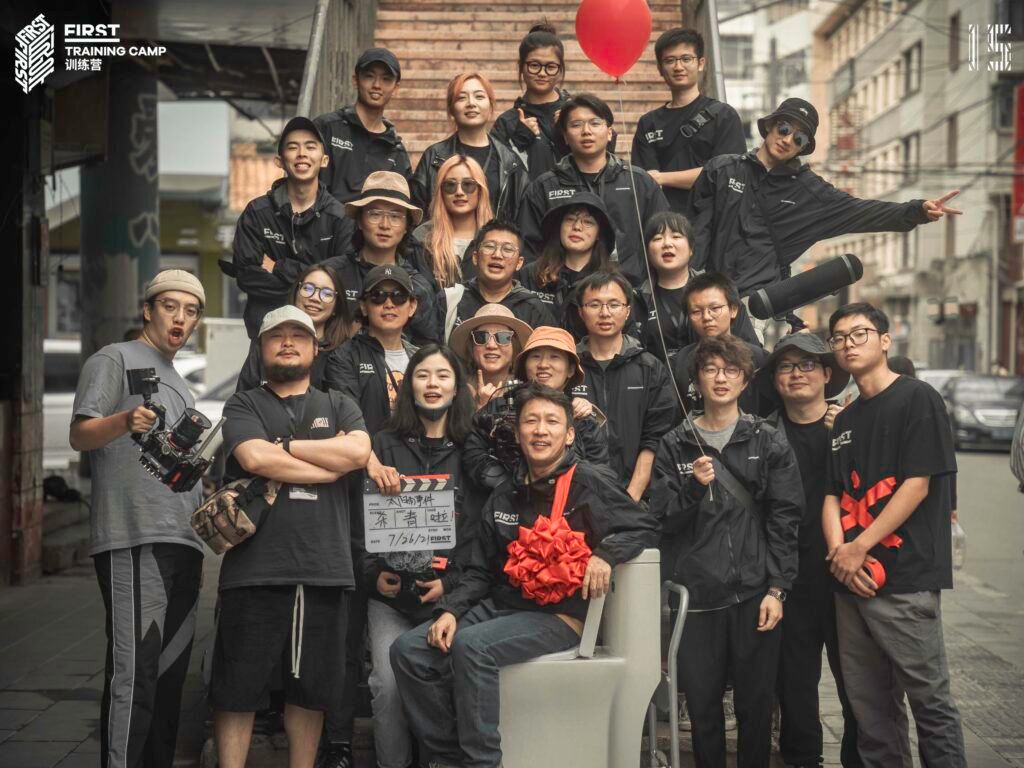
"The Sunshower Incident" wrap photo
As a creative filmmaking tool for young filmmakers, the MAVO Edge 8K delivered professional cinema imagery for creators throughout the FIRST Training Camp productions.
The FIRST Training Camp has come to a close, but the future of young filmmakers continues to be written. Kinefinity will join young filmmakers in devoting the fullest enthusiasm to the art of cinema.
View our previous posts supporting the FIRST Training Camp to learn more about the camp productions:A Conversation with FIRST Young Filmmakers: Behind the Scenes of "Iron Third".