Director Raafi Rivero's Cinematography Notes
This article is the cinematography notes ofRe/connectionsdirectorRaafi Rivero, originally published onNoFilmSchoolat Kinefinity's invitation. It describes in detail Raafi and his team's entire creative process of shooting the film with the MAVO LF, in hopes of being helpful to Kinefinity users and all friends interested in the MAVO LF.
Re/connections
When I pick up any camera, my biggest question is: "Can I make a movie with this?"
This winter, we shot Re/Connections under complex, constrained conditions. When I pick up any camera, my biggest question is: "Can I make a movie with this?" One of my goals was to test and push the camera under difficult conditions—high contrast, low light, highly saturated sources, and more.
____
Reportedly, the MAVO LF has nearly the same CMOS scan speed as the ARRI Alexa Classic—which is stunning, given that the full-frame sensor is physically almost double the size of a Super35 sensor.
The third act was designed specifically to test rolling shutter. We also used CinemaDNG to shoot a phone call scene, testing the camera's RAW capabilities and comparing it to the ProRes-shot scenes in the film. Throughout, we experimented with complex configurations: sliders, gimbals, and handheld.
Based on the story's needs, we carefully selected and tested each location—almost every location had been locked in weeks or months before principal photography.
____
I was very pleased with the MAVO LF's sensor crop functionality. To achieve higher slow-motion capability and give the focus puller a more manageable focus throw, in certain scenes we cropped to Super35 size. The MAVO LF's crop mode switching is much faster than other brands' cameras—some require a full reboot to change crop modes.
Shooting with a compact, lightweight camera means any scenario can be handled easily. For example, in one scene with a seven-minute side-roll shot, a heavier camera would have required a much heavier tripod. The MAVO LF eliminated that entirely. A smaller, lighter camera meant we could shoot on the street with a lightweight tripod. Because we occupied minimal public space and could move quickly, we didn't even need to apply for permits. Leveraging the MAVO LF's compact advantage, we also mounted it on a handheld gimbal for certain shots.
____
Typically, only the Sony A7s series and Panasonic Varicam deliver clean images above ISO 5000. What surprised us was that the MAVO LF's ultra-high native ISO meant all night scenes in the film were shot at ISO 5120—with zero noise reduction applied! (Performance above native ISO was also quite good.)
For this shoot we also used Kinefinity's MVP full-frame prime lens set. The Bokkelux cinema lenses are the production version of this set, previously exhibited at NoFilmSchool in 2016 and 2017. I had written extensively about them before ever using them, and knew they were well-made and very sharp. In practice, they turned out to be so sharp that we used diffusion filters in several scenes.
____
Why shoot full-frame? Cinematographers guide viewers' attention through selective focus—but smaller sensors produce deeper depth of field by default, reducing this ability. Sometimes deep depth of field serves the story (Citizen Kane championed the technique), but sometimes shallow depth of field can scatter attention rather than focus it.
Since the Canon 5D Mark II changed the industry more than a decade ago, full-frame has been the holy grail for camera manufacturers and cinematographers alike. Despite the 5D's significant limitations in bit depth, resolution, dynamic range, and codecs, it set the standard for CMOS size and color science.
____
Full-frame cinema cameras solve the Canon 5D's technical limitations—but at a price that puts them out of reach for most independent cinematographers. At $11,999, the MAVO LF is already the least expensive full-frame cinema camera available. The Sony Venice is around $28,000, and from Canon to RED prices keep climbing—the most expensive being the Alexa LF at $100,000.
____
Working with a full-frame camera is like having an extra gear on a bicycle, or an additional octave on a keyboard. Not every scene requires it, and you can absolutely shoot without it—but the richness it adds to the image is something you simply can't achieve any other way.
The MAVO LF is a professional cinema camera that delivers outstanding image quality, and at its price point, nothing else comes close.
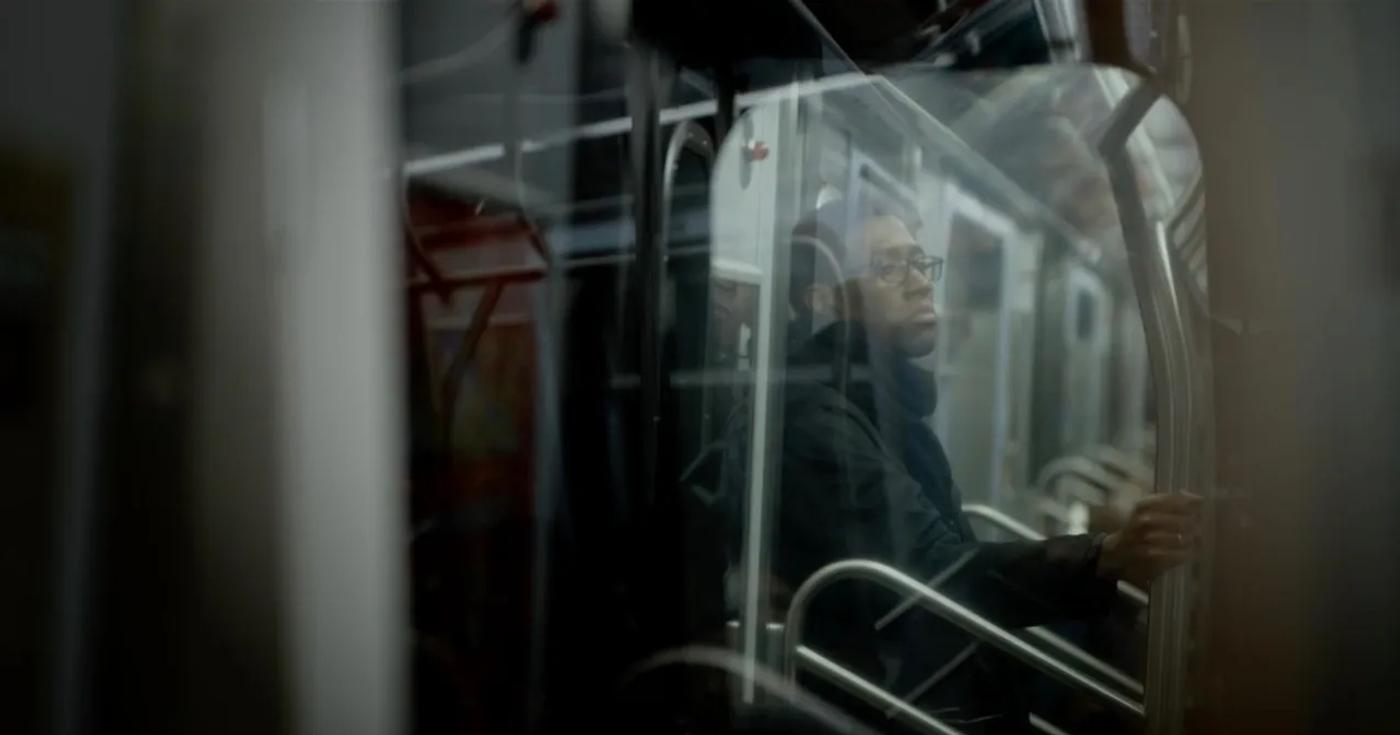
But sensor size isn't everything. People frequently ask whether MAVO LF and TERRA 4K footage can be cut together. Some seem worried about using a near-S35 sensor like the TERRA 4K, and wonder whether the TERRA can produce cinema-quality images. In Re/connections, the MAVO LF and TERRA were used interchangeably—one scene was shot exclusively on the TERRA 4K. Can you tell which one?
____
To test the MAVO LF's rapid parameter adjustment during shooting, we designed a scene with the actor moving between buildings at New York's Union Square. In prep, we locked down the timing and actor marks—pedestrians would constantly pass through the frame as the actor walked against the light.
Perhaps because the lead actor looked very approachable, tourists stopped and asked him for directions during the shoot. With their consent, we captured these 'interactions'—and everyone was happy to participate. Working with non-professional actors is genuinely fun, as they simply can't follow floor marks, so we had to constantly reframe and stay ready to shoot. Needless to say, the MAVO LF was impressive throughout.
____
I'm one of the earliest cinematographers to work with Kinefinity. The most common question I get is about reliability and technical support. Early on with the MAVO LF engineering prototype I encountered a minor issue, but the very next day Kinefinity replaced the unit—and I used that camera for six months without a single problem.
On technical support: Kinefinity recently announced the opening of their first US service center, Origin Cine, in Los Angeles. This will give potential US customers much greater confidence in Kinefinity. Having now shot with the TERRA 4K for over a year and the MAVO LF for over six months, I can tell everyone: Kinefinity cameras are very reliable. Alongside this film's release, I'll also be featuring both cinema cameras in a documentary called 'Legacy Lives On,' airing on TVOne on June 19th.
____
In summary, Kinefinity's cinema system delivers powerful capability. The MAVO LF and TERRA 4K will be my primary cameras for the foreseeable future. Every 'limitation' in this film came from me as a director—the camera imposed no constraints on the shoot whatsoever. If there were any limitations, they were entirely my own.