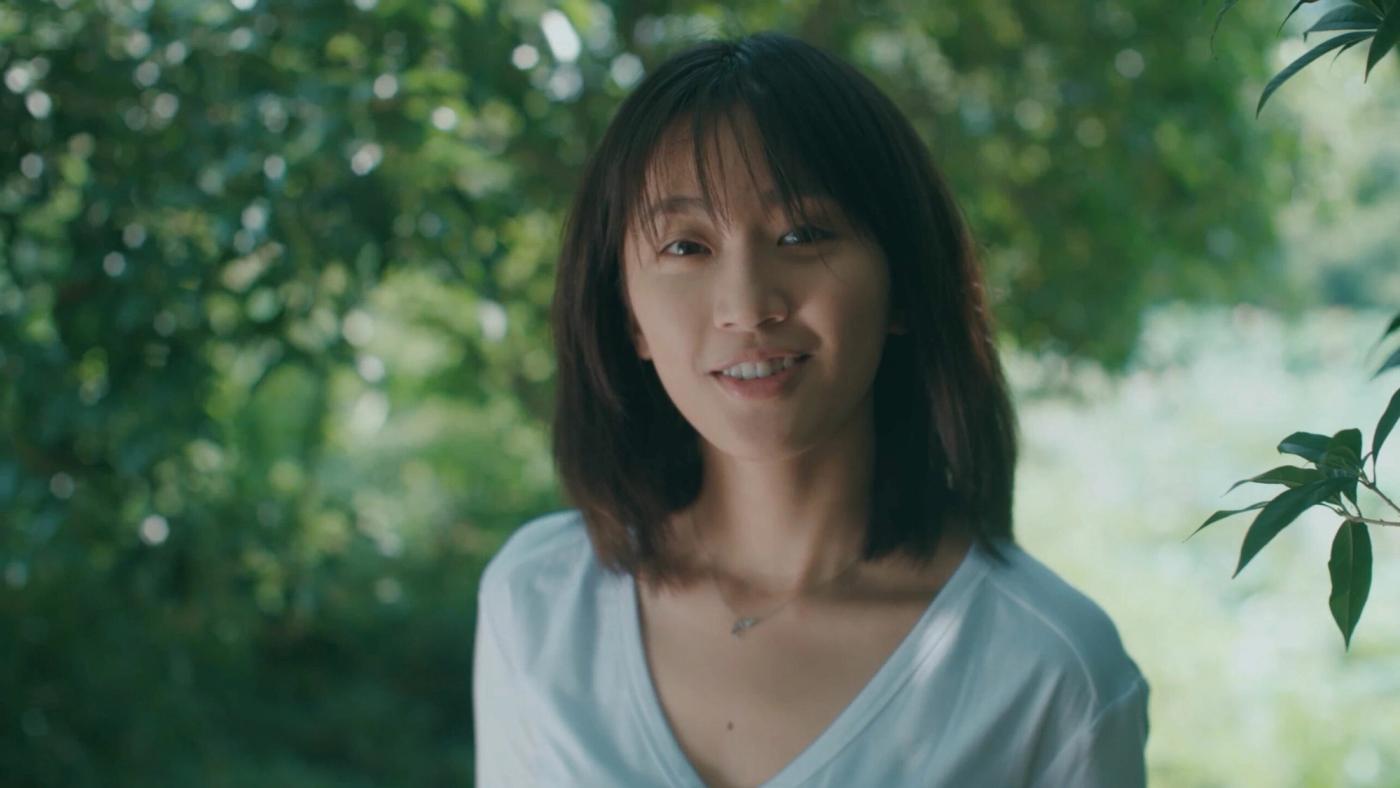
Director Zheng Jingxi's Cinematographer's Notes
Self-taught director Zheng Jingxi fell in love with film through his passion for photography. After graduating from university, he worked on documentary productions abroad. Upon returning to China, his first short film "Lin Zi" won an award at the12th 37 Short Film Festival. This article is the director's cinematography notes covering subject matter, visual style, equipment choices, and creative experience—documenting his very first short film from start to finish. He hopes it will be helpful to Kinefinity users and friends interested in Kinefinity.
Lin Zi
Origins
The decision to make this film happened quite by chance. That summer, Producer Yang called and asked if I'd be interested in joining a short film competition—creating a story together and trying to make it happen. I'd shot some fun little films with friends before, but never anything as formally conceived as a creative short. I figured it would be a challenge, so I said, "OK, I'm in." Producer Yang brought together the rest of the core team. During prep, everyone brainstormed together and pitched their own ideas and scripts. After discussion, we decided "Lin Zi" was the best fit and started shooting. Everyone participated voluntarily, and the creative atmosphere was wonderful—I'm very grateful for everyone's support.
____
Subject Matter
At the start we were leaning toward a mystery-thriller, but we couldn't come up with a script that satisfied us within the limited timeframe. Then a crew member suggested a direction: why not try a theme about someone considering suicide due to heartbreak or debt? That sparked something in me. I began thinking about which groups of people are troubled by such thoughts, and landed on people with depression. Once the direction was confirmed, I started writing the script while gathering reference films (About a Girl, Baby Blue, Skins Unseen — Effy S1P4, Fragments of Autumn). We ultimately settled on the theme: "A person with depression's farewell to the world on the last day of her life."
The Title
During scriptwriting the film wasn't called "Lin Zi"—it was "A Girl and Her Few Things," which felt too clunky. I changed it to "Whispering Forest" (呓语森林), using a pun on whispering / depression (呓语/抑郁). I didn't give the girl a name, thinking it might create more emotional resonance—like a tailor's hollow tree, a nameless girl speaking her heart in the forest. When finalizing the title for the poster, the cinematographer had a flash of inspiration: "Lin Zi" was concise and interesting—it could be a girl's name and a metaphor for the environment, and the lead actress happened to have those exact characters in her name. That settled it. But I still love the meaning of "Whispering Forest," so we kept "Whispering Wood" as the English subtitle.
____
Locations
The main location was a forest. As the character's emotional state shifts, I wanted the forest to reflect different textures, so subtle changes in natural light at different times of day were important to me. After scouting, I relied primarily on natural light and used the Nanlight S-60 as a supplementary source—compact enough to hold by hand. In the character's breakdown shots, I used it to create rim light and catchlights from the upper right of the frame. The B-roll sections used different lighting for different atmospheres—in the scene where the best friend cries, I used LED strips as ambient light, a single light on the right simulating a floor lamp, and catchlight coming from the front-left. Another special setup was the bathtub scene, where we used waterproof LED rods to light the actress's face from the side.
Visual Style
This shoot involved a lot of handheld and shoulder-mounted shots. The character has depression—her world is closed off, lacking effective communication with the outside world. But modern society is built on human connection, and most people with depression have a strong tendency toward self-rumination, preventing them from receiving positive feedback externally and forcing them inward. With no outlet for pressure, they sink deeper into depression. The camera here acts as the window through which the character speaks to the world—an imagined object through which she needs connection but doesn't know how to express it. It symbolizes her farewell before death, like a monologue. I needed the camera to shift with her emotions: when she's cheerful, the camera is relatively steady; after the breakup, it keeps some distance; at the final breakdown, it actively interacts with her emotions.
____
Equipment
In terms of camera and lens choices, we didn't have much flexibility. Within our limited time, the MAVO S35 was the best camera available—it was also the producer's everyday working camera. For lenses we ruled out zooms; based on our needs, lightweight primes were the best choice. We happened to have a Nikon 50mm f/1.4 film lens on hand and used that—it worked out great. This was my first time shooting a complete project with a Kinefinity camera. The MAVO left a deep impression—incredibly compact, the whole unit weighing just 1 kg, almost as light as a mirrorless camera, yet the image quality leap is substantial. We shot in 4K 10-bit 4:2:2 ProRes, which is very friendly to post-production workflows—the 10-bit 4:2:2 encoding provides enormous latitude for color grading and cuts smoothly in both DaVinci Resolve and Premiere.
____
The MAVO's dynamic range is impressive and the color latitude is a real surprise. I was using older Nikon lenses, but they worked perfectly on the MAVO—mount compatibility is seamless. The MAVO also offers professional expansion ports and uses SSD recording, making it compatible with complete film production workflows. Overall the MAVO impressed me, especially Kinefinity's color science. We all know ARRI colors are very accurate, and when I applied ARRI's 709 LUTs to MAVO footage, the colors across all color spaces were spot-on—that left a very deep impression. I have to say the MAVO is truly an excellent camera, no less capable than RED cameras with comparable specs.
____
Creative Experience
During the shoot, what struck me most was the interaction with the actress. Portraying a person with depression believably is not easy. The shoot spanned a day and a half, with more than half a day spent just working through scenes with her. The final emotional breakdown scene especially—I needed one single tear, not more, not less. For that one tear we shot for nearly two hours, with me mostly physically simulating the camera's movement to interact with her. That was very challenging. My biggest regret was the sound quality. The signal-to-noise ratio wasn't well controlled, and although we applied noise reduction and EQ in post, issues remained. That was a deeply valuable lesson.